What Is the Torah?
What Is the Torah, and Why Does It Matter So Much?
Have you ever walked into a synagogue and noticed a beautifully decorated cabinet at the front of the room? Inside that cabinet, called the Aron Kodesh (Holy Ark), rests the most sacred object in Jewish life: a handwritten scroll of the Torah. When it is taken out and carried through the congregation, people reach out to touch it with their prayer shawl or siddur, then kiss the spot that made contact. Some people cry. Others sing. But why? What is it about this scroll that inspires such reverence, and what exactly does it contain?
The Torah is the foundational text of Judaism. In the narrowest sense, it refers to the Five Books of Moses—the first five books of the Hebrew Bible. In its broadest sense, it encompasses the entire body of Jewish teaching, from ancient law to modern commentary. Understanding the Torah is the key to understanding what it means to be Jewish, because it is the source from which virtually every Jewish practice, belief, and value flows.
The Written Torah: The Five Books of Moses
The Written Torah, known in Hebrew as Torah Shebichtav, consists of five books. In Hebrew, they are called Chumash (from the word chamesh, meaning five). Each book has a Hebrew name taken from its opening words and an English name that reflects its content:
- Bereishit (Genesis): The story of creation, the first humans, the great flood, and the lives of the patriarchs and matriarchs—Avraham and Sarah, Yitzchak and Rivkah, Yaakov and his wives. It traces the origins of the Jewish people from a single family.
- Shemot (Exodus): The dramatic story of slavery in Egypt, the ten plagues, the splitting of the sea, and the defining moment of Jewish history—the revelation at Mount Sinai where God gave the Torah to the entire nation.
- Vayikra (Leviticus): The laws governing the sacrificial system, purity and impurity, the priesthood, and ethical conduct. It contains the famous commandment "Love your neighbor as yourself."
- Bamidbar (Numbers): The forty-year journey through the desert, census records, rebellions, and the challenges of forging a people from a group of former slaves.
- Devarim (Deuteronomy): Moses’s farewell speeches to the people of Israel before they enter the Promised Land. It reviews the laws, recounts their journey, and pleads with the people to remain faithful to God.
Together, these five books contain 613 commandments (mitzvot) that cover every area of life—from how to eat and dress to how to conduct business, treat strangers, and build a just society. The Torah is not merely a history book or a legal code; it is a complete worldview.
The Oral Torah: The Key That Unlocks the Text
One of the most important concepts in Judaism is that the Written Torah was never meant to stand alone. Alongside the written text, God gave Moses an Oral Torah (Torah Sheba'al Peh)—a body of explanations, traditions, and interpretive methods that fill in the details the written text leaves open.
For example, the Torah commands us to "bind them as a sign on your hand." But bind what? On which part of the hand? Using what materials? The Written Torah does not say. It is the Oral Torah that explains these details, giving us the practice of tefillin as we know it today.
Similarly, the Torah says to "rest on the seventh day," but what counts as rest? The Oral Torah provides the detailed framework of Shabbat laws that define this concept.
For centuries, the Oral Torah was passed down from teacher to student by word of mouth. But after the destruction of the Second Temple in 70 CE, when the Jewish world was in upheaval and teachers were being killed, the sages feared the Oral Torah would be lost. Around the year 200 CE, Rabbi Yehudah HaNasi compiled these oral traditions into a written work called the Mishnah. Later generations of rabbis discussed and debated the Mishnah, and their discussions were recorded in the Gemara. Together, the Mishnah and Gemara form the Talmud—the central text of the Oral Torah tradition.
How the Torah Is Read in Synagogue
The Torah is not just studied privately—it is a communal experience. Every week in synagogue, a portion of the Torah (parashah) is chanted publicly from a handwritten scroll. The entire Torah is divided into portions so that it is completed in a yearly cycle, starting and ending on the holiday of Simchat Torah.
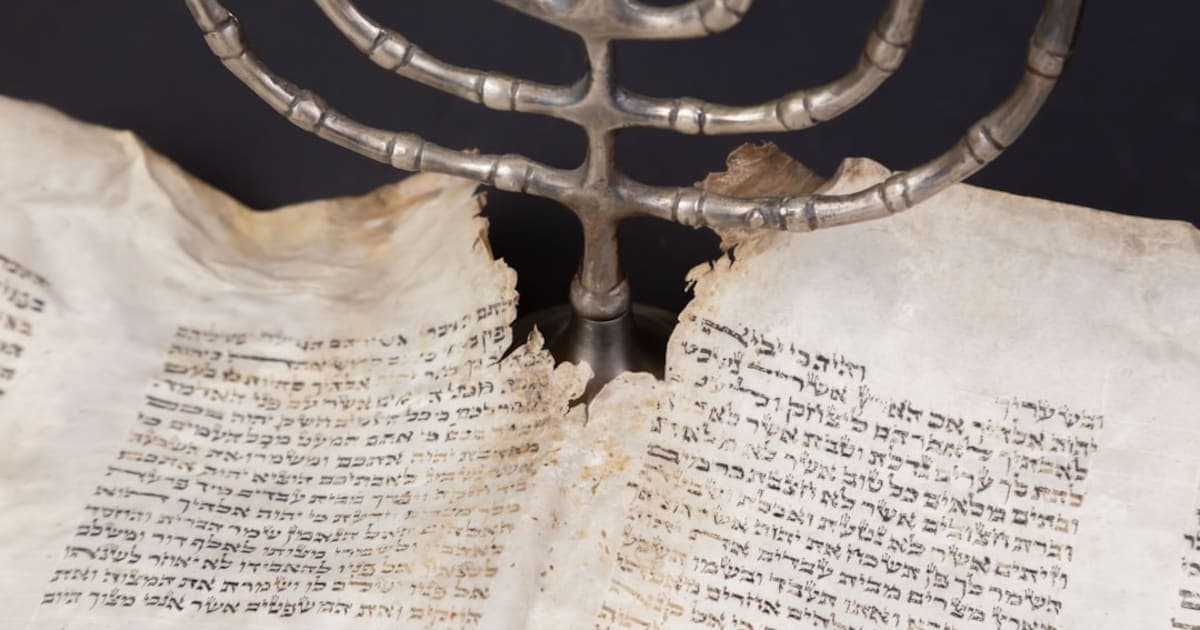
The Torah scroll itself is a remarkable object. Every letter is hand-written by a trained scribe (sofer) using a quill, special ink, and parchment made from a kosher animal’s skin. If even one letter is missing or incorrectly formed, the entire scroll is considered invalid until it is corrected. There are 304,805 letters in a Torah scroll, and writing one takes approximately a year.
During the reading, a person called a ba'al koreh chants the text using an ancient system of musical notation (trop or ta'amei hamikra). Congregants are called up for aliyot (literally "ascents") to recite blessings before and after sections of the reading. Being called to the Torah is considered a great honor.
Torah Study: A Lifelong Jewish Practice
In Judaism, studying Torah is not just an intellectual exercise—it is itself considered a mitzvah, one of the most important ones. The Mishnah teaches that Torah study is equal to all other commandments combined because it leads to the fulfillment of everything else.
Torah study takes many forms:
- Weekly parashah study: Many Jews review the weekly Torah portion, often with the commentary of Rashi and other commentators.
- Daf Yomi: A worldwide program of studying one page of Talmud per day, completing the entire Talmud in about seven and a half years.
- Chavruta study: The traditional method of studying with a partner, debating and discussing the text together. This back-and-forth dialogue is considered the ideal way to learn.
- Shiurim (classes): Rabbis and teachers give classes on every level and topic, from beginner Torah overviews to advanced Talmudic analysis.
The beauty of Torah study is that it is accessible to everyone. You do not need to be a scholar to begin. In fact, the tradition teaches that every person, regardless of background, has a unique insight to bring to the text. This is one reason why Torah study has remained vibrant for thousands of years—each generation brings new questions to the same ancient words.
The Torah and Daily Jewish Life
The Torah is not an artifact locked behind glass. It is a living, breathing guide that shapes how observant Jews experience every day. Consider a typical day: you wake up and say morning blessings, thanking God for the new day—that comes from the Torah. You eat breakfast and say a blessing over your food—that comes from the Torah. You go to work and are required to deal honestly in business—that is a Torah commandment. You speak carefully about others, avoiding gossip—that is the Torah’s prohibition of lashon hara. At the end of the week, you light Shabbat candles and make kiddush—all rooted in Torah.
The Torah’s influence extends far beyond individual practice. It is the foundation for Jewish communal values: caring for the poor, welcoming strangers, pursuing justice, honoring parents, and building a society where every person is treated with dignity. These are not modern innovations—they are Torah values that have shaped Jewish communities for over 3,000 years.
More Than a Book: A Covenant and a Relationship
Perhaps the most important thing to understand about the Torah is that it is not just a text—it is a brit, a covenant. It represents the ongoing relationship between God and the Jewish people. When the Torah was given at Sinai, the people declared "Na'aseh v'nishma"—"We will do and we will understand." They accepted the Torah not just as a set of rules, but as a way of life, a path of connection to the Divine.
This is why the Torah remains so central to Jewish identity. It is the source of every holiday, every prayer, every ethical teaching. It connects a Jew in New York to a Jew in Jerusalem to a Jew in Melbourne. It connects the present generation to Moses, to Avraham, and ultimately to the Creator. Whether you are just beginning to explore Judaism or have been studying for decades, the Torah is always there, offering another layer of meaning, another insight, another question to wrestle with. And that is exactly the point—the Torah is not meant to be finished. It is meant to be lived.