Famous Jewish Commentators (Rashi, Rambam, etc.)

Why Can’t You Just Read the Torah on Your Own?
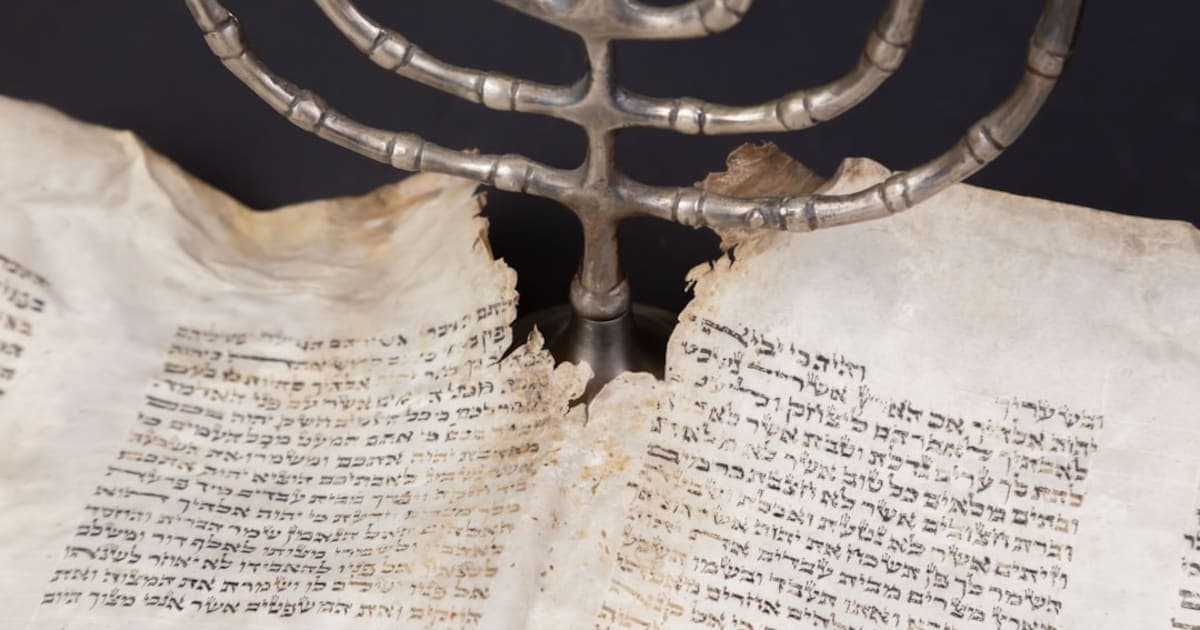
You can, of course. But here is something remarkable about Jewish tradition: for over a thousand years, Jews have almost never studied the Torah or Talmud in isolation. Open a traditional Jewish text and you will find the original words in the center of the page, surrounded by layers of commentary—explanations, questions, debates, and insights written by scholars across the centuries. These commentators are not footnotes. They are essential voices in an ongoing conversation that makes the Torah a living text.
Think of it this way: the Torah is like a seed planted by God. The commentators are the generations of gardeners who have tended it, watered it, and helped it grow into a vast, branching tree. Without them, the text would remain beautiful but inaccessible—its brief language hiding depths that only careful study can reveal. These are the scholars who unlocked the Torah for the Jewish people, and their influence continues to shape every page of Jewish learning today.
Rashi: The Master of Clarity (1040–1105)
No discussion of Jewish commentators can begin anywhere other than with Rashi—Rabbi Shlomo Yitzchaki. Born in Troyes, France, in 1040, Rashi is the single most influential commentator in Jewish history. His explanations on both the Torah and the Talmud are typically the first ones a student encounters, and for good reason: Rashi’s genius lies in his extraordinary clarity.
Rashi’s commentary on the Torah focuses primarily on the peshat—the straightforward meaning of the text. When the Torah is ambiguous, Rashi steps in with a brief, precise explanation. When there is a narrative gap—why did a character act this way? What is the connection between two seemingly unrelated verses?—Rashi often draws on Midrash (rabbinic legends and teachings) to fill in the picture. But he always chooses his Midrashim carefully, selecting those that best resolve the textual difficulty.
On the Talmud, Rashi’s contribution is even more critical. The Talmud is written in a mix of Hebrew and Aramaic, without punctuation, in a highly compressed style that assumes familiarity with its method of argumentation. Before Rashi, the Talmud was essentially a closed book for anyone without years of training. Rashi’s commentary acts as a phrase-by-phrase guide, explaining what each term means, who is speaking, and where the argument is heading. It is not an exaggeration to say that without Rashi, most people would be unable to study Talmud at all.
Rashi was not an ivory-tower scholar. He earned his living as a winemaker in the Champagne region of France, and he witnessed the horrors of the First Crusade, which devastated the Jewish communities where he had studied. His commentary is marked by deep compassion and an awareness of the real lives of ordinary Jews. He frequently translated difficult Hebrew or Aramaic words into Old French (written in Hebrew letters), making his commentary a treasure trove for historians of medieval language.
The Tosafists: Rashi’s Intellectual Heirs (12th–14th centuries)
Rashi’s influence extended directly through his family. His grandsons—Rashbam (Rabbi Shmuel ben Meir) and Rabbeinu Tam (Rabbi Yaakov ben Meir)—along with their students, formed a school of Talmud commentary known as the Tosafists ("those who add"). While Rashi explained what the Talmud was saying, the Tosafists asked harder questions: How do you reconcile this passage with a contradictory passage elsewhere? What is the underlying principle? Where does this logic break down?
The Tosafot appear on the outer margin of the standard Talmud page, directly across from Rashi’s commentary on the inner margin. This layout creates a visual conversation: Rashi explains, the Tosafists challenge and deepen. Every student of Talmud since the Middle Ages has grown up navigating between these two voices.
Rambam (Maimonides): The Systematic Genius (1138–1204)
If Rashi is the commentator who illuminates the text, Rambam—Rabbi Moshe ben Maimon, also known as Maimonides—is the thinker who organized it. Born in Cordoba, Spain, during the Golden Age of Sephardic Jewry, Rambam’s family was forced to flee when the fanatical Almohad dynasty conquered the region. After years of wandering, he settled in Egypt, where he served as the personal physician to the Sultan and as the leader of the Jewish community.
Rambam produced two works of staggering scope:
- Mishneh Torah: A comprehensive code of all Jewish law, organized topically in clear, elegant Hebrew. For the first time, a Jew could look up any area of halacha—from Shabbat to prayer to charity to the laws of kings—and find a definitive ruling without wading through pages of Talmudic debate. This was revolutionary and also controversial, since Rambam generally did not cite his sources, making it hard to challenge his conclusions.
- Guide for the Perplexed (Moreh Nevuchim): A philosophical masterwork aimed at intellectuals who were struggling to reconcile their Jewish faith with Aristotelian philosophy. Rambam argued that reason and faith are not enemies but partners, and that the Torah’s truths can be understood through rational inquiry. This book influenced not only Jewish thought but also Christian and Islamic philosophy.
Rambam also wrote a commentary on the Mishnah, which includes his famous 13 Principles of Faith—a concise summary of what a Jew should believe, from the existence and unity of God to the coming of the Messiah and the resurrection of the dead. These principles became one of the most widely known statements of Jewish theology.
The traditional saying about Rambam captures his unique status: "From Moses [the prophet] to Moses [Maimonides], there was none like Moses."
Ramban (Nachmanides): The Kabbalistic Commentator (1194–1270)
Rabbi Moshe ben Nachman, known as Ramban or Nachmanides, was born in Girona, Spain. He was a towering figure in his own right—a leading legal authority, a physician, and a community leader. But his Torah commentary is what secured his place in the canon of Jewish study.
Where Rashi explains the simple meaning and Rambam systematizes the law, Ramban goes deeper. His commentary is philosophical, mystical, and often personal. He frequently engages with Rashi, sometimes agreeing, sometimes respectfully disagreeing, and sometimes offering a completely different reading of the text. He was deeply influenced by Kabbalah (Jewish mysticism), and his commentary contains hints and allusions to kabbalistic ideas that he deliberately left veiled.
Ramban is perhaps best known publicly for the Disputation of Barcelona in 1263, where he was forced by King James I of Aragon to debate a Jewish convert to Christianity about whether Jesus was the Messiah. Ramban’s defense of Judaism was so skillful that the king reportedly rewarded him—though Ramban was later forced to flee Spain when the Dominican friars sought to prosecute him for the published account of the debate. He spent his final years in the Land of Israel, where he revitalized the Jewish community in Jerusalem.
Ibn Ezra: The Wandering Scholar (1089–1167)
Rabbi Avraham ibn Ezra was a Sephardic polymath—a poet, grammarian, astronomer, mathematician, and biblical commentator. Born in Tudela, Spain, he spent much of his life wandering through Italy, France, and England, spreading Sephardic learning to Ashkenazic communities.
Ibn Ezra’s Torah commentary is noted for its focus on grammar and linguistics. He believed that a proper understanding of the Torah begins with understanding the Hebrew language itself—the precise meaning of words, verb forms, and sentence structures. He was also a rationalist who occasionally hinted at ideas that later scholars found remarkably modern. He is known for cryptic remarks that some interpret as questioning the traditional authorship of certain verses, though he always maintained a posture of deep piety.
His commentary is often paired with Rashi’s in printed editions of the Torah, giving students a view of how two brilliant minds—one Ashkenazic, one Sephardic—approach the same text from very different angles.
Other Essential Voices
Sforno (1475–1550)
Rabbi Ovadiah Sforno was an Italian rabbi, physician, and philosopher. His Torah commentary is known for its ethical focus and elegant brevity. He often reads the Torah as a guide for personal character development, drawing out moral lessons that speak directly to the reader’s life.
Or HaChaim (1696–1743)
Rabbi Chaim ibn Attar, a Moroccan-born scholar who eventually settled in Jerusalem, wrote a beloved Torah commentary that blends peshat, drash (homiletical interpretation), and mysticism. His work is particularly cherished in Sephardic and Chassidic communities.
Malbim (1809–1879)
Rabbi Meir Leibush ben Yechiel Michel Wisser (the Malbim) wrote a commentary that emphasizes the precision of biblical Hebrew. He argued that there are no true synonyms in the Torah—every word was chosen for a reason—and he uses this principle to draw out layers of meaning that other commentators missed.
Nechama Leibowitz (1905–1997)
While not a medieval commentator, Professor Nechama Leibowitz deserves mention as someone who brought the classical commentators to a modern audience. Her weekly Torah study sheets, distributed across Israel for decades, taught generations of students how to compare Rashi, Ramban, Ibn Ezra, and Sforno, showing how each illuminates a different facet of the same text.
How the Commentators Work Together
One of the beautiful features of Jewish study is that these commentators are not studied in isolation—they are studied together. A typical approach to a difficult Torah verse might look like this:
- Read the verse and try to understand it on its own.
- Check Rashi for the plain meaning and relevant Midrash.
- See if Ramban offers a different interpretation or challenges Rashi.
- Look at Ibn Ezra for grammatical insights.
- Consult Sforno for the ethical lesson.
- Turn to Rambam if the verse involves a commandment, to see how the law was codified.
This multi-layered approach is what makes Torah study endlessly rich. The same verse that you studied as a child reveals new dimensions when you encounter it through the eyes of a different commentator. It is a conversation that spans centuries, geographies, and perspectives—and it is open to anyone willing to sit down with the text.
Joining the Conversation
The tradition of commentary did not end in the Middle Ages. It continues today in every synagogue class, every study group, and every family discussion around the Shabbat table. When you open the weekly Torah portion and share your own question or insight, you are doing exactly what Rashi, Rambam, and Ramban did—engaging with the text, wrestling with its meaning, and adding your voice to a conversation that has been going on for over a thousand years.
As the Talmud teaches: "Turn it over and turn it over, for everything is in it." The commentators are the ones who show us how to turn it over. They are the guides who ensure that the Torah remains not a relic of the past, but a living, breathing source of wisdom for every generation.