What Is Chanukah?
What Is Chanukah?
Have you ever walked past a window glowing with candles in December and wondered what it was all about? Or maybe you have been invited to a Chanukah party and want to understand the deeper meaning behind the celebration? Chanukah, also known as the Festival of Lights, is one of the most widely celebrated Jewish holidays, and its story of courage, faith, and miracles has resonated with Jews for over two thousand years.
The Historical Background: What Happened?
To truly appreciate Chanukah, we need to travel back to the second century BCE, to a time when the land of Israel was under the control of the Seleucid Empire, a Greek-Syrian dynasty. The emperor Antiochus IV, who arrogantly called himself "Epiphanes" (meaning "God Manifest"), launched a systematic campaign to erase Jewish identity. He outlawed Torah study, banned circumcision, and forced Jews to worship Greek idols. Most devastating of all, he desecrated the Holy Temple in Jerusalem, the spiritual heart of the Jewish people, by erecting a statue of Zeus on the altar and sacrificing pigs in the sacred precincts.
Many Jews, under tremendous pressure, succumbed to the Hellenistic culture. But in a small village called Modin, an elderly priest named Mattityahu (Mattathias) refused to bow. When a Greek officer demanded that he offer a pagan sacrifice, Mattityahu declared, "Whoever is for God, follow me!" He and his five sons, led most prominently by Judah, nicknamed "Maccabee" (meaning "the Hammer"), launched a guerrilla revolt against the most powerful military in the ancient world.
Against staggering odds, the small band of Maccabees defeated the mighty Greek armies. It was one of the great military upsets in ancient history. But the real miracle, according to Jewish tradition, was still to come.
The Miracle of the Oil
When the Maccabees recaptured the Temple and went to rededicate it, they needed to relight the menorah, the great golden candelabrum that was meant to burn continuously. The problem? The Greeks had contaminated almost all of the olive oil in the Temple. After a thorough search, the Maccabees found just one small sealed cruse of pure oil, enough to burn for a single day. It would take eight full days to press and prepare new oil.
They lit the menorah anyway, and something extraordinary happened: that tiny amount of oil burned not for one day, but for eight consecutive days, until new oil was ready. The word "Chanukah" itself means "dedication," referring to this rededication of the Temple. The Sages established the eight-day festival to commemorate this miracle for all future generations.
When Is Chanukah Celebrated?
Chanukah begins on the 25th of the Hebrew month of Kislev and lasts for eight days. Because the Hebrew calendar is lunar-based, the exact dates shift on the secular calendar each year, typically falling somewhere between late November and late December. Unlike Shabbat and the biblical holidays, Chanukah does not involve the same restrictions on work or creative activities, which means you can go about your regular routine while still enjoying the holiday celebrations.
The Central Mitzvah: Lighting the Menorah
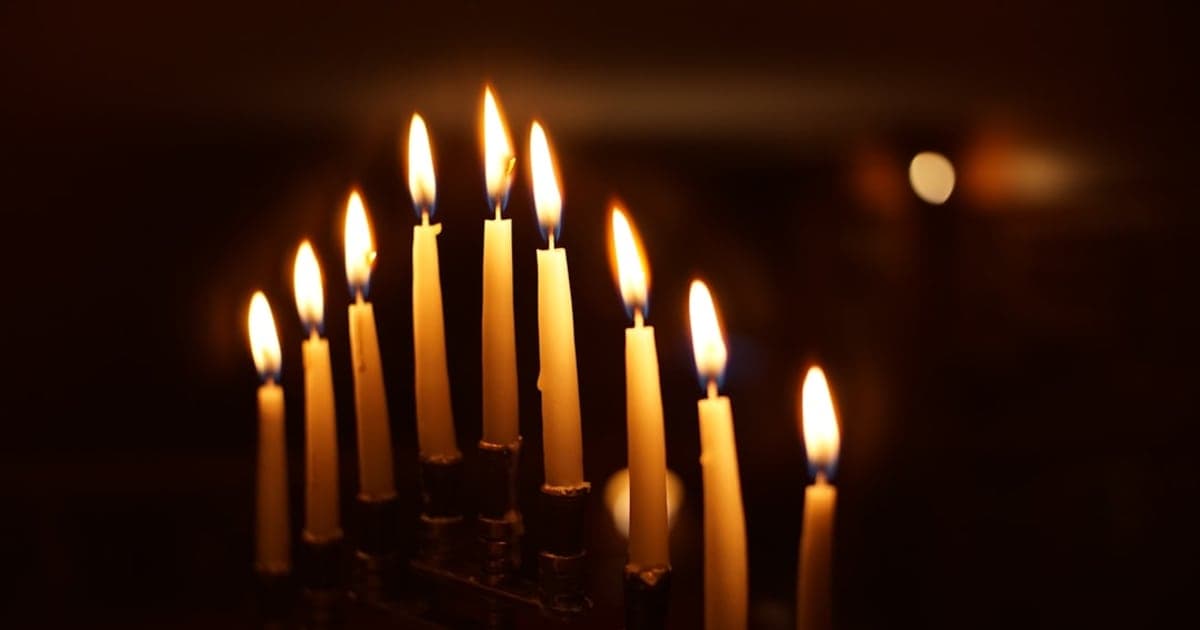
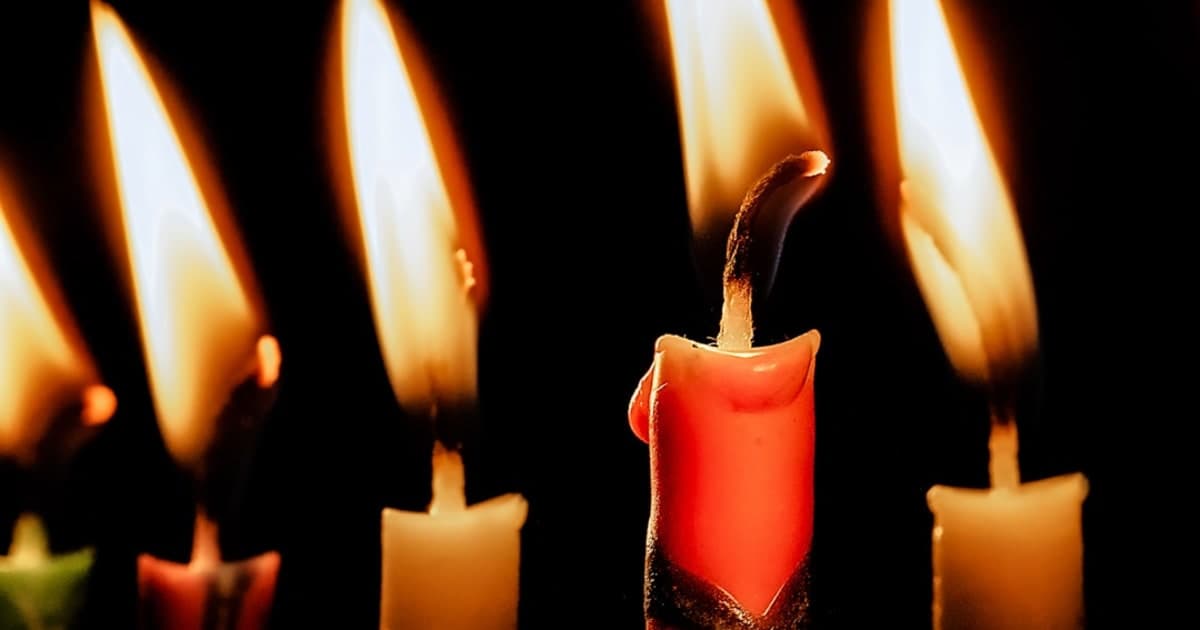
The heart of Chanukah observance is lighting the menorah (more precisely called a hanukkiah, since it has nine branches rather than the Temple menorah's seven). Each night, we add one more candle, starting with one on the first night and building to eight on the final night. A special ninth candle called the shamash ("helper") is used to light the others.
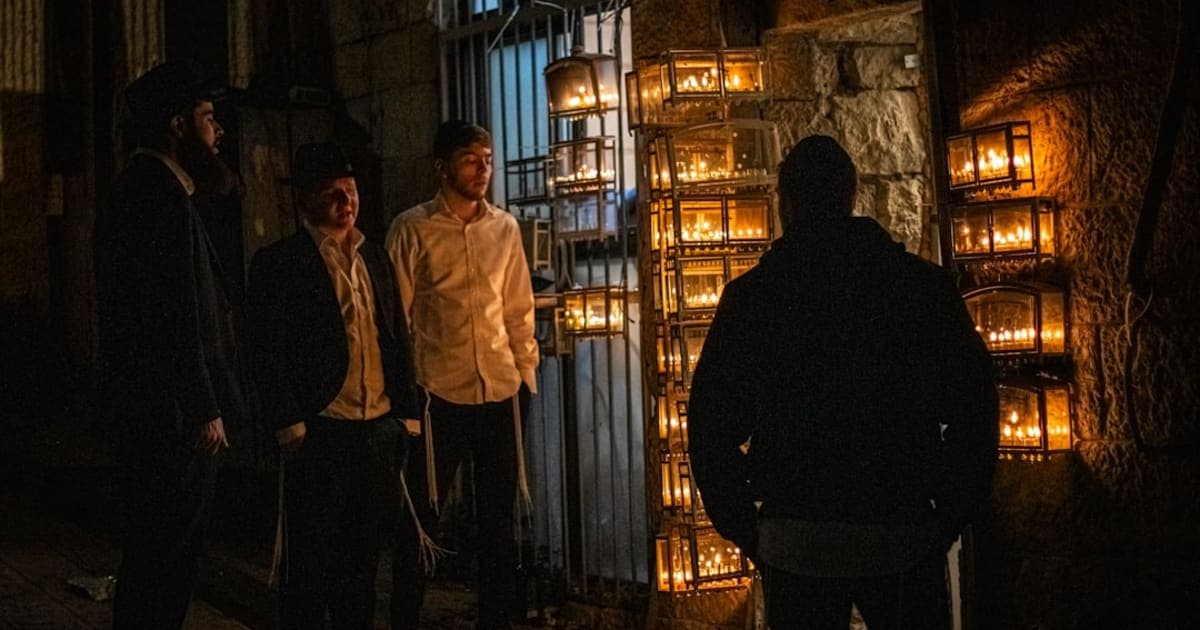
The menorah is traditionally placed near a window or doorway to fulfill the principle of pirsumei nisa, publicizing the miracle. The flickering flames are meant to announce to the world that miracles happened and continue to happen.
The Blessings
Before lighting the menorah each night, we recite two blessings. On the first night, we add a third blessing, Shehechiyanu, thanking God for enabling us to reach this special occasion. The blessings are:
- Lehadlik Ner Chanukah: Thanking God for sanctifying us with the commandment to kindle the Chanukah lights
- She'asah Nisim: Thanking God for performing miracles for our ancestors in those days, at this time
- Shehechiyanu (first night only): Thanking God for sustaining us and enabling us to reach this season
After lighting, families traditionally sing Hanerot Halalu and Maoz Tzur, beautiful hymns that retell the story of the miracle and express gratitude.
Chanukah Foods: Why All the Fried Stuff?
Since the miracle centered on oil, it became customary to eat foods fried in oil during Chanukah. The two most famous Chanukah foods are:
- Latkes (potato pancakes): Crispy, golden, and absolutely delicious, latkes are the Ashkenazi Chanukah staple. Served with applesauce or sour cream, they are the centerpiece of many Chanukah gatherings. The debate over applesauce versus sour cream has divided families for generations (in the best possible way).
- Sufganiyot (jelly doughnuts): In Israel and Sephardic communities, deep-fried jelly doughnuts are the Chanukah treat of choice. Today, bakeries compete to create the most creative fillings, from classic raspberry to dulce de leche and halva cream.
Some communities also eat cheese dishes during Chanukah, in honor of the heroine Judith (Yehudit), who fed cheese to a Greek general, made him drowsy, and then defeated him, helping to save her people.
The Dreidel: More Than Just a Game
The dreidel is a four-sided spinning top with a Hebrew letter on each side: Nun, Gimel, Hei, and Shin. These letters stand for Nes Gadol Hayah Sham, "A great miracle happened there." (In Israel, the Shin is replaced with a Pei, for Nes Gadol Hayah Po, "A great miracle happened here.")
According to tradition, when the Greeks outlawed Torah study, Jewish children would gather in secret to learn. If soldiers approached, they would pull out spinning tops and pretend to be playing games. The dreidel thus symbolizes the Jewish commitment to Torah learning even under persecution.
Today, the dreidel game is played with chocolate coins (gelt) or nuts, and it remains a beloved family activity that brings together grandparents and grandchildren alike.
Chanukah Gelt and Gift-Giving
The custom of giving Chanukah gelt (money) has deep roots. Originally, small amounts of money were given to children to encourage their Torah study and to teach the value of tzedakah (charity). Children were encouraged to share a portion of their gelt with those in need. Chocolate coins wrapped in gold foil became a fun variation of this custom.
While exchanging elaborate gifts on each night of Chanukah is a relatively modern development influenced by proximity to the secular holiday season, many families use the opportunity to give meaningful gifts, especially books, educational items, or charitable donations made in the recipient's honor.
Special Prayers: Al HaNissim and Hallel
Throughout the eight days of Chanukah, special additions are made to the daily prayers. Al HaNissim ("For the Miracles") is a thanksgiving paragraph inserted into the Amidah prayer and Grace After Meals. It recounts the story of the Maccabees and expresses gratitude for God's miraculous intervention.
Additionally, the full Hallel (Psalms of Praise) is recited every morning of Chanukah. This is actually unique: on Passover, we only recite a partial Hallel after the first days, but on Chanukah, we say the complete Hallel all eight days. This teaches us that the spiritual victory of Chanukah, the triumph of light over darkness, calls for unbounded praise.
Oil vs. Candles: What Should You Use?
While both oil and candles are perfectly acceptable for lighting the menorah, using olive oil is considered the ideal choice since it most closely mirrors the original miracle. The oil in the Temple was olive oil, and using it is considered a hiddur mitzvah, a beautification of the commandment. That said, standard Chanukah candles are widely used and absolutely fulfill the mitzvah. The most important thing is to light, period.
The Deeper Message of Chanukah
Chanukah is not just a story from long ago. Its themes resonate powerfully in every generation:
- The few can overcome the many: The Maccabees were vastly outnumbered, yet they prevailed. Chanukah teaches us that standing up for what is right matters, even when the odds seem impossible.
- Light pushes away darkness: A single candle can illuminate a dark room. Each night of Chanukah, as we add another flame, we are reminded that even a small amount of light can transform the world around us.
- Jewish identity is worth fighting for: The core conflict of the Chanukah story was about the freedom to live as Jews. The Maccabees did not fight for territory or wealth but for the right to practice their faith. This message continues to inspire Jewish communities worldwide.
- Miracles happen: Sometimes we just need to light the oil we have and trust that it will be enough. The Maccabees did not wait for a guarantee. They lit the menorah with what they had, and the miracle followed.
Practical Tips for Celebrating Chanukah
If you are new to celebrating Chanukah, here are some easy ways to get started:
- Get a menorah: You can find beautiful hanukkiot (menorahs) at Judaica stores, online, or even make one with your kids as a craft project.
- Gather the family: The best time to light is right after nightfall. Bring everyone together, say the blessings, and watch the flames dance.
- Make or buy some latkes: Even a simple recipe of grated potatoes, onion, egg, and flour, fried in oil until golden, is incredibly delicious.
- Play dreidel: Grab some chocolate coins and a dreidel for a fun family game after lighting.
- Give tzedakah: Chanukah is a perfect time to teach children the value of giving to others. Let each child choose a cause that matters to them.
- Attend a public menorah lighting: Many communities host large public menorah lightings with music, food, and celebration. It is a wonderful way to experience pirsumei nisa on a grand scale.
Chanukah and the Jewish Calendar
Chanukah occupies a unique place in the Jewish holiday cycle. Unlike the biblical holidays such as Passover, Shavuot, and Sukkot, Chanukah was established by the rabbis of the Talmudic era. Yet it has become one of the most universally observed Jewish celebrations, a testament to its powerful message and joyful traditions.
The holiday always falls during the darkest time of the year in the Northern Hemisphere, when the days are shortest. There is deep symbolism in this timing: precisely when darkness is at its peak, we kindle lights and proclaim that light will prevail.
Conclusion
Chanukah is far more than just a "Jewish holiday in December." It is a celebration of courage, faith, identity, and the belief that light will always overcome darkness. Whether you are lighting your first menorah or your fiftieth, there is something magical about watching those small flames flicker in the window, announcing to the world that miracles are real.
As you celebrate this year, take a moment to reflect on the Maccabees' bravery, the miracle of the oil, and the enduring power of Jewish faith. And then enjoy some latkes, because honestly, that part is pretty great too.