Are Grasshoppers Kosher?
Wait -- Some Insects Are Actually Kosher?
If someone told you that eating bugs could be a mitzvah, you might think they were joking. After all, one of the most well-known aspects of keeping kosher is the strict prohibition against consuming insects. Every tiny aphid on a strawberry and every thrip hiding in a lettuce leaf must be carefully removed before eating. So how is it possible that certain grasshoppers and locusts are not only permitted but actually have a kosher tradition stretching back thousands of years?
The answer lies in the Torah itself, which carves out a remarkable exception to the general ban on insects. While the vast majority of creeping and flying creatures are forbidden, four specific types of locusts are explicitly permitted. This article explores this fascinating corner of Jewish dietary law -- what makes these insects kosher, which communities still eat them, and why most of the Jewish world has lost this tradition.
What the Torah Says About Kosher Insects
In the book of Leviticus (chapter 11, verses 20-23), the Torah first states a general rule: all flying insects that walk on four legs are an abomination. But then comes the surprising exception -- those that have "jointed legs above their feet, with which to leap upon the earth" are permitted.
The Torah then names four specific types:
- Arbeh -- commonly translated as the migratory locust
- Sol'am -- a type of bald locust
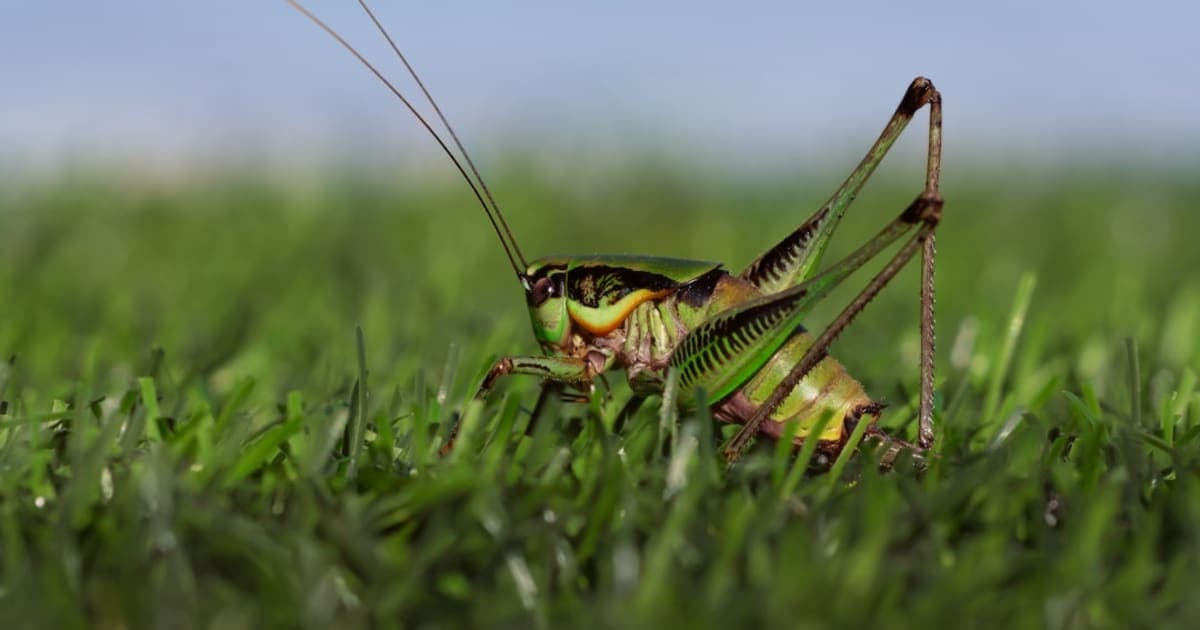
- Chargol -- a cricket-like species (sometimes translated as grasshopper)
- Chagav -- another grasshopper variety
These four species share the identifying characteristic of having elongated hind legs designed for jumping, a feature that distinguishes them from other insects.
The Identification Problem
Here is where things get complicated. Unlike kosher animals and fish, which have clear physical signs (split hooves and chewing cud for animals; fins and scales for fish), the identification of the four kosher locust species relies heavily on tradition. The Torah names them, but which exact modern species correspond to those ancient Hebrew names?
Jewish law operates on a fundamental principle: when it comes to identifying kosher species, a continuous, reliable tradition (mesorah) is required. You cannot simply look at an insect, decide it matches the Torah's description, and declare it kosher. There must be an unbroken chain of knowledge passed from generation to generation confirming that "this particular species is the arbeh" or "this is the chagav."
For most Jewish communities around the world -- Ashkenazi, Sephardi, and others -- this chain of tradition was broken over the centuries. As Jewish communities moved through different climates and regions, the specific knowledge of which locusts were kosher was lost. Without that continuous tradition, eating any insect became effectively prohibited as a practical matter.
Why Most Rabbis Say No Today
The great medieval authorities, including Rambam (Maimonides) and others, established that without a living tradition identifying the species, one may not eat them. This is not because the Torah's permission was revoked -- it still stands. Rather, it is because we can no longer be certain which species the Torah intended. When in doubt about a Torah prohibition that carries serious consequences, Jewish law errs on the side of caution.
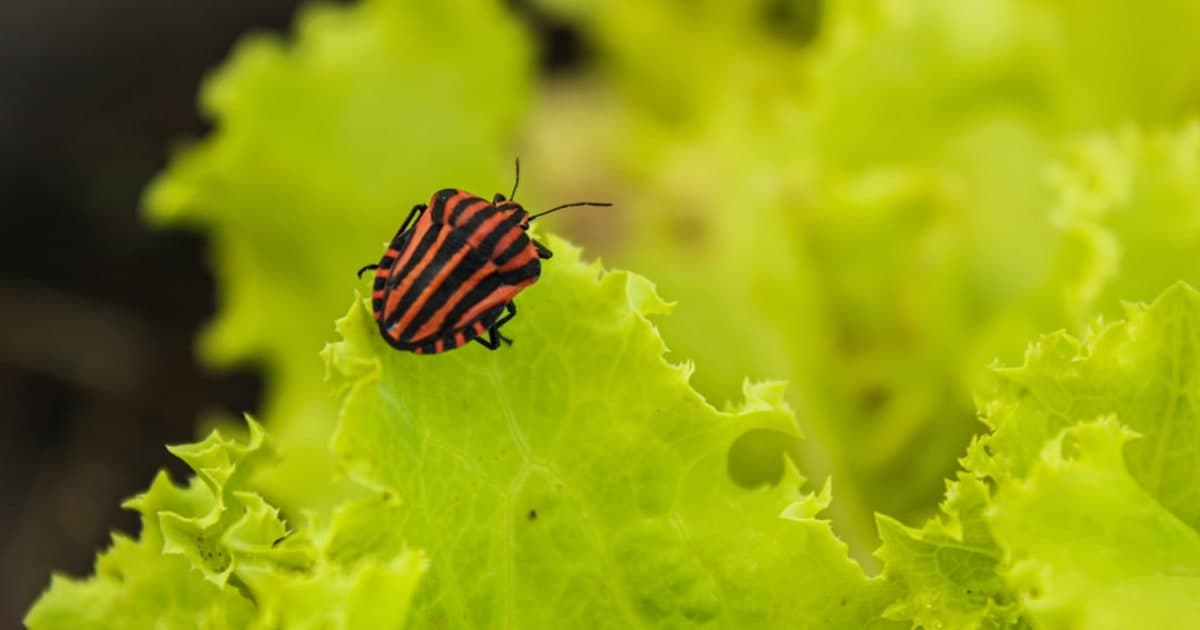
This means that for the vast majority of observant Jews today, all insects are off the menu. In fact, the careful checking of vegetables for bugs -- including broccoli and cauliflower and leafy greens like lettuce -- is one of the most commonly practiced aspects of kashrut precisely because of how seriously the prohibition is taken.
The Yemenite Exception
The Yemenite Jewish community is the remarkable exception to this rule. For over two thousand years, the Jews of Yemen maintained an unbroken chain of tradition identifying specific locust species as kosher. Living in a region where locust swarms were a regular occurrence, they preserved the practical knowledge of which species to eat and how to prepare them.
Why Their Tradition Survived
Several factors contributed to the survival of this tradition among Yemenite Jews:
- Geographic stability -- Yemenite Jews lived in the same region for millennia, maintaining contact with the same insect species
- Locust swarms -- Regular swarms made locust consumption a practical reality, not just an abstract legal question
- Isolation -- The relative isolation of the Yemenite community meant their traditions were preserved without outside influence
- Careful transmission -- Knowledge was passed meticulously from parent to child, rabbi to student
Which Species Do Yemenite Jews Eat?
The primary species identified in the Yemenite tradition is the desert locust (Schistocerca gregaria), which they identify as the Torah's arbeh. This is the same species responsible for the famous locust plagues described in the Bible and still occurring in parts of Africa and the Middle East today.
Yemenite authorities identified specific physical characteristics for kosher locusts:
- They must have four walking legs plus two elongated jumping legs
- They must have four wings that cover most of the body
- The species must be identified by a reliable tradition -- not just physical appearance
How Are Kosher Locusts Prepared?
In the Yemenite tradition, locusts are typically prepared in one of several ways:
- Roasted -- Placed over an open flame until crispy
- Boiled -- Cooked in salted water
- Sun-dried -- Dried and stored for later use, sometimes ground into a powder
- Fried -- Cooked in oil with spices
The head, wings, and legs are typically removed before eating, and the locust is consumed for its protein-rich body.
The Modern Debate
The question of kosher insects has gained renewed interest in recent years, partly due to the global conversation about sustainable protein sources. Insects are remarkably efficient at converting feed into protein, and organizations around the world are exploring insect farming as a solution to food sustainability challenges.
This has led some to ask: should Jewish law recognize more insect species as kosher? The answer from virtually all halachic authorities remains the same -- without a continuous tradition, we cannot identify the species, and the prohibition remains in effect. Even the most lenient opinions only extend permission to the specific species identified within the Yemenite tradition, and only for those who follow that tradition.
Can Non-Yemenite Jews Eat Yemenite-Identified Locusts?
This is a matter of debate among contemporary rabbis. Some authorities hold that since the Yemenite tradition is genuine and unbroken, any Jew may rely on it. Others maintain that a person should follow the traditions of their own community -- and if their community lost the tradition, they should not eat locusts regardless of what the Yemenite community does.
In practice, very few non-Yemenite Jews eat locusts, even in Israel where Yemenite kosher locusts are occasionally available.
What About Other Insects?
It is important to emphasize that the permission for locusts does not extend to any other insects. Ants, beetles, caterpillars, mealworms, and all other insects remain strictly forbidden according to all opinions. The Torah's exception is narrow and specific.
In fact, the prohibition against eating insects is unusually severe in Jewish law. Consuming a single non-kosher insect can involve the violation of multiple Torah prohibitions simultaneously -- far more than eating a piece of non-kosher meat. This is why the practice of carefully checking produce for bugs is so fundamental to keeping kosher.
Honey: The Famous Insect Exception
You might be wondering: if insects are forbidden, why is honey kosher? After all, it is produced by bees. The answer is that honey is not considered a product "of" the bee in the halachic sense. The bee collects nectar from flowers and processes it, but the honey is viewed as a transformed plant product rather than a secretion of the insect itself. This stands in contrast to, say, bee larvae, which would not be kosher.
Lessons from the Kosher Locust Tradition
The story of kosher grasshoppers teaches us several important things about how Jewish law works:
- Tradition matters -- Jewish law is not just about reading texts; it depends on living, transmitted knowledge
- When in doubt, be cautious -- The loss of a tradition leads to greater restriction, not greater leniency
- Diversity is real -- Different Jewish communities can have legitimately different practices based on their preserved traditions
- Ancient wisdom persists -- The Yemenite tradition demonstrates how carefully Jewish knowledge has been guarded across millennia
Whether or not you ever find yourself face-to-face with a plate of roasted locusts, understanding this unique aspect of kashrut deepens our appreciation for the richness and complexity of Jewish dietary law. It reminds us that the kosher system is not a simple set of arbitrary rules but a carefully maintained tradition with deep roots in the Torah and centuries of Jewish life.