The Four Species (Arba Minim)
The Four Species (Arba Minim)
Why does one of Judaism's most important holidays involve waving a palm branch and a citrus fruit in six directions? The mitzvah of the four species (arba minim) is one of the most distinctive and beautiful observances on Sukkot. Understanding what the four species are, how to use them, and what they symbolize transforms this practice from a curious ritual into a profound spiritual experience.
What Are the Four Species?
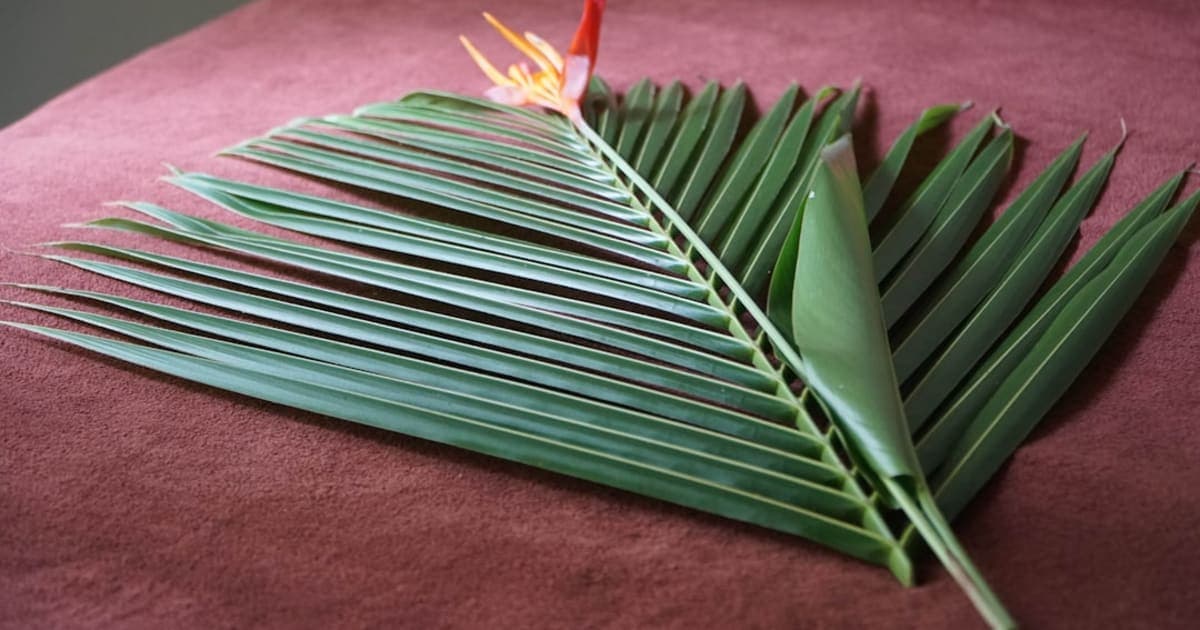
Lulav (Palm Branch): A closed frond from a date palm tree. The lulav should be straight, green, and its top leaves should not be split. It is the tallest of the four species and forms the central column of the bundle.
Etrog (Citron): A fragrant citrus fruit that resembles a large, bumpy lemon. The etrog should be clean, yellow (at least partially), and ideally have its pitam (the small protrusion at the top) intact. Selecting a beautiful etrog is an art form, and etrog markets before Sukkot are lively scenes of careful inspection and negotiation.
Hadassim (Myrtle Branches): Three branches of myrtle, each with leaves growing in sets of three along the stem (called meshulash, tripled). The leaves should be fresh and green, covering most of the branch.
Aravot (Willow Branches): Two branches of willow, with elongated leaves and smooth-edged (not serrated) margins. Willows dry out quickly, so they often need to be replaced during the holiday.
How to Hold and Wave Them
The lulav, hadassim, and aravot are bound together into a single bundle. The myrtle branches go on the right side of the lulav and the willow branches on the left (from the holder's perspective). The bundle is held in the right hand. The etrog is held in the left hand with the pitam (top) pointing down.
When reciting the blessing (al netilat lulav), the etrog is initially held upside down (pitam pointing down). After the blessing, the etrog is turned right-side up (pitam pointing up), the two hands are brought together, and the four species are waved in six directions: forward (east), right (south), backward (west), left (north), up, and down. Each wave involves extending the arms in that direction, shaking the species gently, and bringing them back.
The waving in all directions symbolizes that God is everywhere, in every direction. It also represents drawing divine blessing from all corners of the world.
When Do We Use Them?
The four species are taken every day of Sukkot except Shabbat. They are used during the morning prayer service, specifically during Hallel and the Hoshanot procession around the bimah. Many people also wave them in the sukkah.
On Hoshanah Rabbah, the seventh day of Sukkot, the four species are used during seven circuits around the bimah.
The Symbolism
The four species are rich in symbolism. The most well-known interpretation links them to types of Jews. The etrog has both taste and fragrance, representing Jews who have both Torah learning and good deeds. The lulav (date palm, whose fruit has taste but no fragrance) represents those with Torah learning but fewer good deeds. The hadassim (myrtle, with fragrance but no edible fruit) represent those with good deeds but less learning. The aravot (willow, with neither taste nor fragrance) represent those with neither. By binding them all together, we declare that every Jew is essential and that the community is incomplete without each one.
Another interpretation connects the four species to parts of the human body. The lulav represents the spine (uprightness). The etrog represents the heart. The myrtle leaves represent the eyes. The willow leaves represent the lips. Together, they symbolize serving God with every part of our being.
Selecting Beautiful Species
The concept of hiddur mitzvah (beautifying the commandment) is especially emphasized with the four species. Jewish law requires each species to be clean and unblemished, and tradition encourages going beyond the minimum to select the most beautiful specimens available. Before Sukkot, markets selling the four species spring up in Jewish neighborhoods worldwide. Selecting an etrog can take considerable time as buyers carefully examine each fruit for beauty, symmetry, and absence of blemishes.
For a first-time buyer, the best approach is to purchase a complete set from a reliable seller. Many synagogues and Jewish organizations arrange group purchases. Pre-packaged sets are available online from reputable Judaica vendors.
For more on Sukkot, see our guides to building a sukkah, the Ushpizin, and Hoshanah Rabbah.