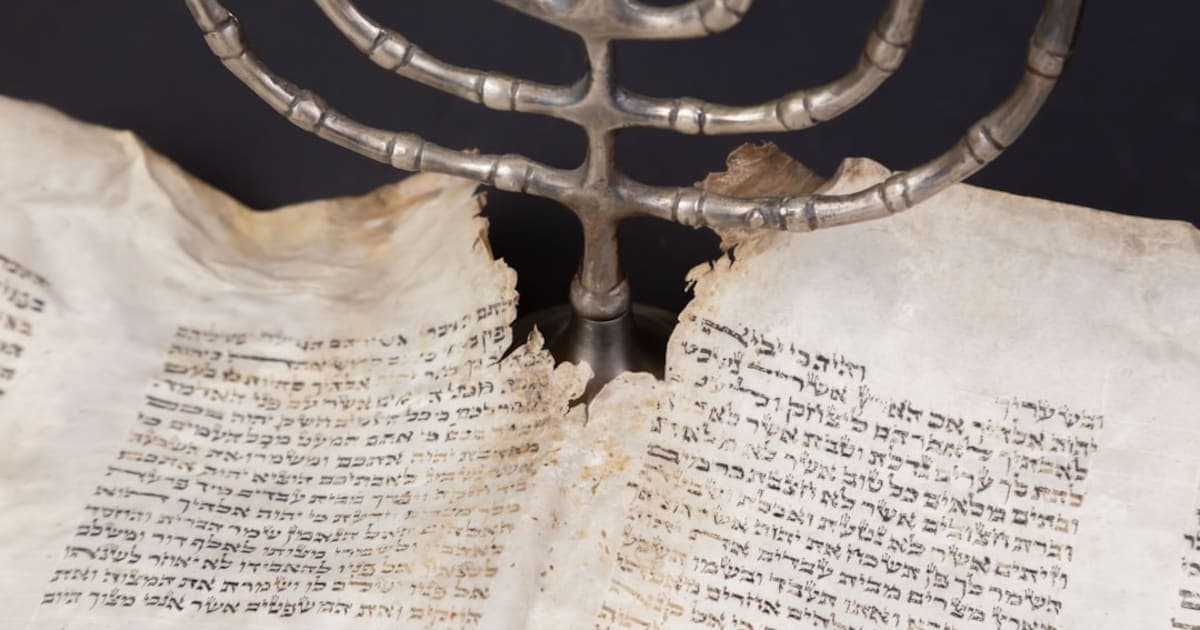
Structure of the Hebrew Bible (Tanach)
Why Is the Hebrew Bible Divided Into Three Parts?
If someone asked you to describe the Bible, you might think of it as a single book. But the Hebrew Bible is actually a carefully organized library—a collection of 24 books written over the course of roughly a thousand years, arranged into three distinct sections. Understanding this structure is not just an academic exercise. It reveals how the Jewish tradition views different types of sacred literature, why certain books carry more authority than others, and how the entire collection fits together as a guide for Jewish life and belief.
The Hebrew Bible is called the Tanach (sometimes spelled Tanakh), which is actually an acronym formed from the first letters of its three sections: Torah (Teaching), Nevi’im (Prophets), and Ketuvim (Writings). Each section has its own character, purpose, and level of sanctity within the tradition. Together, they form the Written Torah—the foundation upon which the Talmud, the commentaries, and all of Jewish law and thought are built.
Torah: The Five Books of Moses
The Torah is the holiest section of the Tanach. It consists of five books, which is why it is also called the Chumash (from chamesh, meaning five) or the Pentateuch (from the Greek for "five scrolls"). The Torah is believed to have been given by God to Moses at Sinai, and it is the only section of the Tanach that is read publicly from a handwritten scroll in synagogue every week.
The five books are:
- Bereishit (Genesis): Creation, the first humans, the flood, and the stories of the patriarchs and matriarchs—Avraham, Sarah, Yitzchak, Rivkah, Yaakov, Rachel, and Leah. The book traces how a single family becomes a people.
- Shemot (Exodus): The slavery in Egypt, the ten plagues, the splitting of the Red Sea, the revelation at Sinai, and the building of the Mishkan (Tabernacle). This is the book of national birth and covenant.
- Vayikra (Leviticus): The laws of the sacrificial system, the priesthood, purity and impurity, ethical commandments, and the holiness code. Often the most challenging book for modern readers, it contains some of the Torah’s deepest ethical teachings, including "Love your neighbor as yourself."
- Bamidbar (Numbers): The 40-year journey through the wilderness. It includes census data, laws, rebellions, and the stories of the spies, Korach’s rebellion, and Bilaam’s blessings.
- Devarim (Deuteronomy): Moses’s farewell addresses to the people of Israel. He reviews the laws, recounts their history, and urges them to remain faithful as they prepare to enter the Promised Land.
The Torah contains 613 commandments (mitzvot) that form the basis of Jewish law. It is the source from which every other section of the Tanach draws its authority. In the synagogue, the Torah scroll is treated with the highest reverence—it is hand-written by a scribe, stored in the Holy Ark, and when it is taken out for reading, the congregation rises.
Nevi’im: The Prophets
The second section of the Tanach, Nevi’im, contains the books of the prophets. These are divided into two groups: the Former Prophets (Nevi’im Rishonim) and the Latter Prophets (Nevi’im Acharonim).
The Former Prophets
These four books read like a historical narrative, picking up where the Torah left off. They tell the story of the Israelites from their entry into the Promised Land through the destruction of the First Temple:
- Yehoshua (Joshua): The conquest and settlement of the Land of Israel under Joshua, Moses’s successor.
- Shoftim (Judges): A turbulent period of tribal leaders like Deborah, Gideon, and Samson, before the establishment of the monarchy.
- Shmuel (Samuel, often divided into I and II): The transition from the period of the Judges to the monarchy, including the stories of Samuel, King Saul, and King David.
- Melachim (Kings, often divided into I and II): The reign of King Solomon, the building of the First Temple, the division of the kingdom, and ultimately the destruction of both kingdoms and the Babylonian exile.
Though they are classified as "prophetic" books, the Former Prophets are primarily narrative. The Jewish tradition considers them prophetic because they were authored by prophets and because they interpret history through a prophetic lens—events are not random but are directly connected to the people’s faithfulness or unfaithfulness to God.
The Latter Prophets
These are the books most people think of when they hear "the prophets"—passionate speeches, visions, and oracles delivered by individuals who were called by God to deliver His message. They include three "major" prophets (named for the length of their books, not their importance):
- Yeshayahu (Isaiah): Visions of judgment and redemption, including the famous prophecy that the Temple will become "a house of prayer for all nations" and images of a future era of peace.
- Yirmiyahu (Jeremiah): The prophet who warned of the destruction of the First Temple and wept when his warnings went unheeded.
- Yechezkel (Ezekiel): A priest who prophesied from exile in Babylon, offering dramatic visions including the valley of dry bones—a powerful symbol of national resurrection.
Then there are the Twelve Minor Prophets (Trei Asar), traditionally counted as one book. They include Hosea, Joel, Amos, Obadiah, Jonah, Micah, Nahum, Habakkuk, Zephaniah, Haggai, Zechariah, and Malachi. Each delivers a distinct message, from Jonah’s story of repentance to Amos’s fierce demand for social justice.
Selections from the Prophets are read in synagogue every Shabbat and holiday as the Haftarah—a passage chosen because it thematically connects to the weekly Torah reading. This ensures that the prophetic books remain a living part of Jewish communal life.
Ketuvim: The Writings
The third section of the Tanach is the most diverse. Ketuvim ("Writings") is a collection of books that spans poetry, wisdom literature, history, romance, and apocalyptic vision. It includes:
Wisdom and Poetry
- Tehillim (Psalms): 150 hymns, prayers, and poems attributed primarily to King David. Psalms are recited in daily prayers, in times of distress, at celebrations, and at funerals. They cover the full range of human emotion—from ecstatic praise to desperate anguish.
- Mishlei (Proverbs): Practical wisdom attributed to King Solomon, offering guidance on ethics, relationships, and the pursuit of wisdom. "The fear of God is the beginning of knowledge" is its opening thesis.
- Iyov (Job): A profound philosophical exploration of suffering and divine justice. Job is a righteous man who loses everything and demands to understand why. The book asks questions that humans have wrestled with ever since.
The Five Megillot (Scrolls)
Five short books, each associated with a specific holiday:
- Shir HaShirim (Song of Songs): A love poem read on Passover, interpreted as an allegory of the love between God and Israel.
- Rut (Ruth): The story of Ruth, the Moabite woman who embraced Judaism and became the great-grandmother of King David. Read on Shavuot.
- Eichah (Lamentations): Heartbreaking elegies mourning the destruction of Jerusalem and the Temple. Read on Tisha B’Av.
- Kohelet (Ecclesiastes): A philosophical meditation on the meaning of life, attributed to King Solomon. "Vanity of vanities, all is vanity." Read on Sukkot.
- Esther: The story of Purim—how Queen Esther and her cousin Mordechai saved the Jewish people from the wicked Haman in Persia.
History and Vision
- Daniel: Stories of faith under persecution in Babylon and apocalyptic visions of the future.
- Ezra and Nechemia: The return from Babylonian exile and the rebuilding of the Temple and Jerusalem’s walls.
- Divrei HaYamim (Chronicles, I and II): A retelling of Israelite history from Adam through the decree of Cyrus, offering a theological interpretation of the same events covered in Samuel and Kings.
How the Three Sections Relate to Each Other
The division of the Tanach into three sections is not arbitrary. It reflects a hierarchy of revelation and authority:
- The Torah represents the highest level—direct communication from God to Moses. It is the source of law and the ultimate authority.
- The Prophets represent a secondary level of inspiration. The prophets received the divine word, but through the filter of prophetic vision. They cannot add to or contradict the Torah; they can only interpret, apply, and call the people back to its teachings.
- The Writings represent a third level, often called ruach hakodesh (divine inspiration). These books are sacred, but they are understood as being written under a lower level of divine influence than prophecy.
This hierarchy matters practically. For example, a law derived from the Torah carries more authority than one derived from the Prophets or Writings. The Torah reading in synagogue is the central ritual of the Shabbat service; the Haftarah (from the Prophets) accompanies it but is secondary.
A Living Library
The Tanach is not a book you read once and put on a shelf. It is a library that Jews return to throughout their lives—in synagogue, in study, and in daily prayers that are saturated with its language. The weekly Torah portion, the Haftarah, Psalms recited in prayer, the Megillot read on holidays, the Book of Jonah read on Yom Kippur afternoon—all of these keep the Tanach woven into the rhythm of Jewish life.
Understanding the structure of the Tanach helps you navigate this vast library. It tells you where to go for law (Torah), for moral challenge (Prophets), for poetry and wisdom (Writings), and for the rich historical narrative that connects them all. It is a text that has been studied with the help of great commentators like Rashi, Rambam, and Ramban for nearly a thousand years, and it continues to yield new insights in every generation.
The Tanach is the root system of the Jewish tree. Everything else—the Talmud, the commentaries, the legal codes, the mystical texts—grows from these 24 books. To study them is to connect with the source.