Chanukah Foods and Games
Chanukah Foods and Games: A Delicious and Fun Guide
Is there any holiday where the food and the fun are so perfectly intertwined with the meaning of the celebration? On Chanukah, every crispy bite of a latke and every spin of the dreidel connects us to a story of miracles, courage, and faith. The customs of eating fried foods and playing traditional games are not just enjoyable; they carry deep symbolism that has been handed down through generations. Let us dive into the delicious and playful traditions that make Chanukah such a beloved holiday.
Why Do We Eat Fried Foods on Chanukah?
The answer goes back to the miracle at the heart of the holiday. When the Maccabees rededicated the Holy Temple in Jerusalem, they found only one small cruse of pure olive oil, enough to keep the Temple's menorah burning for a single day. Miraculously, that oil lasted for eight days. To commemorate this miracle, Jews around the world eat foods fried in oil during Chanukah, turning every meal into a delicious reminder of divine intervention.
Latkes: The Quintessential Chanukah Food
Latkes, those irresistible golden potato pancakes, are perhaps the most iconic Chanukah food in Ashkenazi communities. Crispy on the outside and tender on the inside, they are fried in generous amounts of oil, directly connecting the meal to the miracle.
The History of Latkes
Interestingly, the original Chanukah pancakes were not made from potatoes at all. In medieval Europe, Jews made latkes from cheese, ricotta, or buckwheat. The potato latke only became popular in Eastern Europe in the 19th century, when potatoes became cheap and widely available. The shift was so complete that today, for most Ashkenazi Jews, Chanukah without potato latkes is almost unthinkable.
A Classic Latke Recipe
Here is a traditional recipe that has stood the test of time:
- Ingredients: 5 large potatoes (peeled and grated), 1 large onion (grated), 2 eggs, 3 tablespoons flour or matzo meal, salt and pepper to taste, oil for frying (vegetable or olive oil)
- Instructions:
- Grate the potatoes and onion. Squeeze out as much liquid as possible using a clean towel or cheesecloth. This is the secret to crispy latkes.
- Mix the grated potatoes and onion with eggs, flour, salt, and pepper.
- Heat a generous amount of oil in a large frying pan over medium-high heat.
- Drop spoonfuls of the mixture into the hot oil and flatten them slightly.
- Fry until golden brown on each side, about 3 to 4 minutes per side.
- Drain on paper towels and serve immediately.
The Great Topping Debate
The question of whether to top latkes with applesauce or sour cream has divided Jewish families for generations, and honestly, both sides have a good case. Applesauce offers a sweet, fruity contrast to the savory potato, while sour cream provides a cool, tangy richness. The correct answer, of course, is both.
Sufganiyot: Jelly Doughnuts
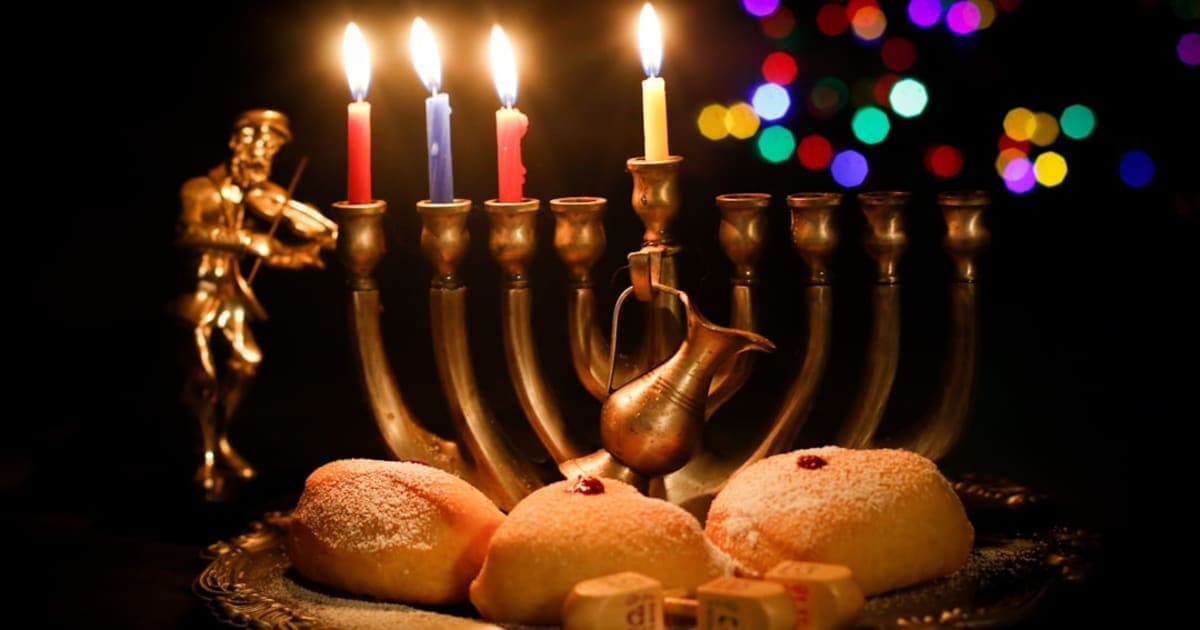
In Israel and Sephardic communities, sufganiyot (singular: sufganiyah) are the Chanukah food of choice. These deep-fried jelly doughnuts are pillowy, sweet, and utterly addictive.
The History of Sufganiyot
The tradition of eating fried dough during Chanukah dates back centuries in Sephardic and Middle Eastern communities, where various fried pastries have long been associated with the holiday. The modern Israeli sufganiyah, with its classic strawberry jelly filling and powdered sugar dusting, became popular in pre-state Israel and is now a massive cultural phenomenon. During Chanukah season, Israeli bakeries sell tens of millions of sufganiyot with increasingly creative fillings.
Modern Sufganiyot Flavors
While the classic strawberry or raspberry jam filling remains beloved, contemporary Israeli bakeries have turned sufganiyot into an art form. Today you can find sufganiyot filled with:
- Dulce de leche
- Halva cream
- Lotus (Biscoff) spread
- Chocolate ganache
- Pistachio cream
- Lemon curd
- Salted caramel
Cheese Dishes: The Story of Judith
Some communities have a beautiful custom of eating dairy foods on Chanukah, particularly cheese dishes. This tradition honors the heroine Judith (Yehudit), who saved her city from a Greek general named Holofernes. According to the story, Judith fed the general salty cheese, which made him thirsty. He drank heavily, fell asleep, and Judith seized the opportunity to defeat him, saving her people.
Popular cheese dishes for Chanukah include:
- Cheese blintzes: Thin crepes filled with sweetened cheese, often fried in butter
- Cheese latkes: A variation on the traditional potato latke made with ricotta or farmer cheese
- Rugelach: While not exclusively a cheese dish, cream cheese-based rugelach are a popular Chanukah treat
Other Traditional Chanukah Foods
- Bimuelos/Loukoumades: Sephardic fried dough balls drizzled with honey or sugar syrup, popular in Greek, Turkish, and Middle Eastern Jewish communities
- Sfenj: Moroccan Jewish fried doughnuts, ring-shaped and soaked in honey
- Keftes de Prasa: Sephardic leek patties fried in oil, a savory alternative to the Ashkenazi potato latke
Chanukah Gelt: Chocolate Coins
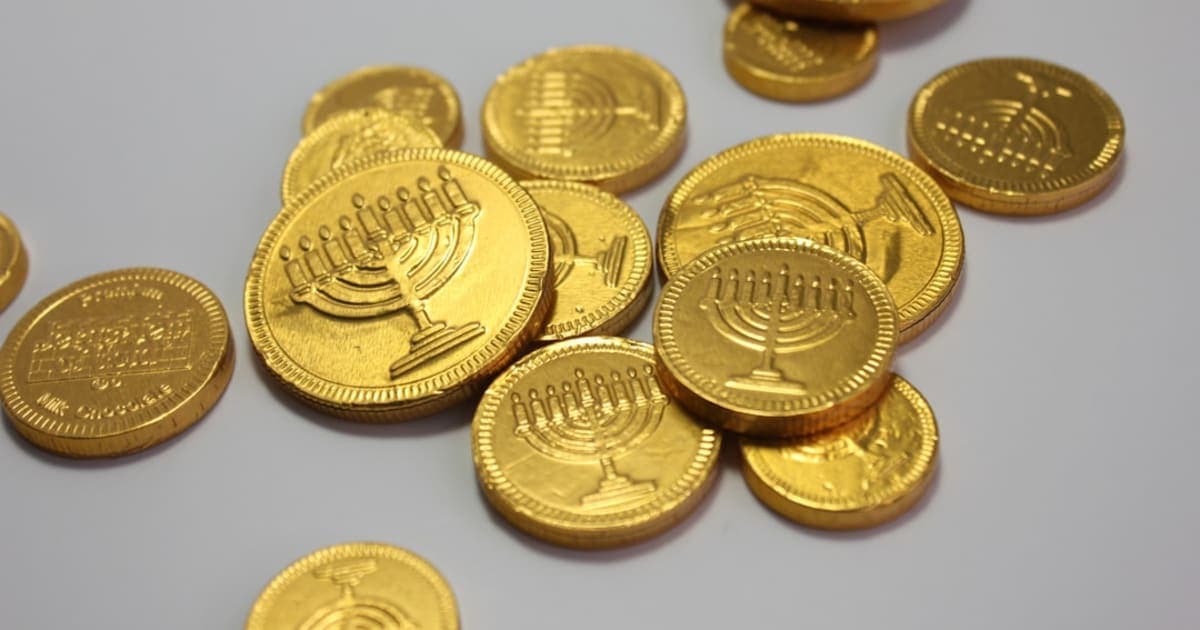
No Chanukah celebration is complete without gelt, the chocolate coins wrapped in gold foil that children (and adults) love. The custom of giving Chanukah gelt, originally real coins, dates back centuries. The money was traditionally given to children to reward Torah study and to teach the value of tzedakah (charity). Children were encouraged to set aside a portion of their gelt for those in need.
Today, chocolate gelt serves double duty: it is both a sweet treat and the currency used in the dreidel game.
The Dreidel Game
The dreidel is one of the most recognizable symbols of Chanukah. This simple four-sided spinning top has entertained Jewish families for centuries and carries a powerful historical message.
The Legend Behind the Dreidel
According to tradition, when the Greeks outlawed Torah study under penalty of death, Jewish children continued to learn in secret. If Greek soldiers approached, the children would quickly hide their scrolls and pull out spinning tops, pretending to be playing a harmless game. The dreidel thus became a symbol of Jewish resilience and the determination to keep Torah learning alive even under the harshest persecution.
The Letters on the Dreidel
Each side of the dreidel bears a Hebrew letter:
- Nun (N): Stands for Nes (miracle)
- Gimel (G): Stands for Gadol (great)
- Hei (H): Stands for Hayah (happened)
- Shin (Sh): Stands for Sham (there)
Together they spell out Nes Gadol Hayah Sham: "A great miracle happened there." In Israel, the Shin is replaced with a Pei, standing for Po (here), since the miracle happened in Israel itself: "A great miracle happened here."
How to Play Dreidel
Here are the complete rules:
- Each player starts with an equal number of game pieces (typically 10 to 15 pieces of chocolate gelt, nuts, raisins, or coins).
- At the start of each round, every player puts one piece into the central pot.
- Players take turns spinning the dreidel. When it lands, the letter facing up determines what happens:
- Nun: Nothing happens. The next player spins.
- Gimel: The player takes the entire pot. Everyone then puts one piece back in to start a new pot.
- Hei: The player takes half the pot (rounding up if odd).
- Shin: The player puts one piece into the pot.
- If a player runs out of pieces, they are either out or can ask another player for a loan (house rules vary).
- The game ends when one player has won everything, or when everyone decides to stop and enjoy some latkes.
Other Chanukah Games and Activities
While dreidel is the classic, there are many other ways families celebrate during the eight nights:
- Menorah lighting countdown: Make each night special by pairing it with a different family activity, such as telling stories, singing songs, or doing an act of kindness
- Chanukah trivia: Test family members' knowledge of Chanukah history and traditions
- Arts and crafts: Make homemade menorahs, dreidels, or Chanukah decorations with kids
- Chanukah scavenger hunt: Hide chocolate gelt around the house and let children search for them
- Charity projects: Choose a different charity each night and discuss why giving matters
Making Chanukah Meaningful
The foods and games of Chanukah are not just about fun, though they are certainly that. Every latke fried in oil recalls the miracle in the Temple. Every spin of the dreidel echoes the bravery of children who risked everything to study Torah. Every piece of chocolate gelt reinforces the Jewish value of generosity.
As you gather around the menorah this Chanukah, with plates of latkes and sufganiyot on the table and a dreidel spinning nearby, remember that you are participating in traditions that connect you to thousands of years of Jewish history. And that connection, like the miracle of the oil, has a way of lasting far longer than you might expect.
For more on celebrating this holiday, see our guides on publicizing the miracle and choosing between oil and candles for your menorah.