What Is Allowed and Prohibited on Shabbat?
Is Shabbat Really Just a Long List of Things You Cannot Do?
If you have ever looked into Shabbat observance, you might have gotten the impression that it is mainly about restrictions: do not cook, do not drive, do not use your phone, do not turn on lights. It can seem overwhelming, even off-putting. But here is the secret that every Shabbat-observant Jew knows: the "restrictions" are not the point. They are the frame. The painting itself, the actual experience of Shabbat, is one of the most joyful, restful, and deeply satisfying things in all of Jewish life.
Understanding what is prohibited on Shabbat and, just as importantly, what is encouraged and celebrated will help you see the whole picture. The rules are not arbitrary. They are carefully designed to create a 25-hour sanctuary in time where you can fully disconnect from the world of doing and enter the world of being.
The Concept of Melacha: Creative Work
The Torah prohibits melacha on Shabbat, but this word does not translate simply as "work." You can carry heavy furniture across your living room on Shabbat (that is not melacha), but you cannot strike a match (that is melacha). The distinction is not about physical effort; it is about creative activity, specifically, the type of purposeful, creative labor that demonstrates human mastery over the physical world.
The sages identified 39 categories of melacha, derived from the types of work that were used to build the Tabernacle (the portable Temple) in the desert. These 39 categories cover the full range of productive human activity and include everything from plowing and sowing to writing and building. Each category also includes subcategories (toldot) that share the same essential character.
The underlying principle is profound: six days a week, we exercise our God-given ability to create, transform, and shape the world. On Shabbat, we step back from that role and acknowledge that God is the ultimate Creator. We stop "playing God" for one day and allow ourselves to simply be creatures, resting in the world God made.
The Main Categories of Prohibition
While the full list of 39 melachot is extensive, most practical Shabbat questions fall into a few major areas. Here is an accessible overview of the most commonly encountered prohibitions:
Fire and Cooking
- Cooking, baking, and heating food: You cannot cook on Shabbat. All food must be prepared before Shabbat begins. However, food that was cooked before Shabbat can be kept warm on a hot plate, blech (metal sheet over the stove), or similar device that was set up before Shabbat. See our guide to cooking for Shabbat for practical tips.
- Lighting or extinguishing fire: This includes striking a match, lighting a stove, blowing out a candle, or turning a gas burner on or off.
- Adjusting flames: You cannot raise or lower the flame on a stove or oven once Shabbat has begun.
Electricity and Technology
- Turning electrical devices on or off: This includes light switches, appliances, computers, and phones. The details of why electricity is prohibited on Shabbat are discussed in depth in our dedicated article.
- Using phones, computers, and tablets: All electronic communication devices are set aside for the duration of Shabbat.
- Watching television or listening to radio: Media consumption is part of the weekday world that we leave behind on Shabbat.
- Timers: Devices that were set to turn on or off before Shabbat may be used. See our article on Shabbat timers for the details of what is and is not permitted.
Writing and Creating
- Writing or drawing: This includes writing with pen, pencil, marker, or any other medium.
- Erasing: Erasing writing or markings is also prohibited.
- Typing or texting: Digital writing falls under the same prohibition.
Carrying in Public Spaces
- Transferring objects between domains: You cannot carry objects from a private domain (like your home) to a public domain (like the street) or vice versa, unless there is an eruv (a halachic enclosure that creates a shared private domain). This includes carrying keys, tissues, books, or a baby's diaper bag.
- Within an eruv: If your community has an eruv, carrying is permitted within its boundaries. Many cities and neighborhoods have an eruv. Check with your local synagogue.
Gardening and Agriculture
- Planting, watering, weeding, or harvesting: Any agricultural activity is prohibited. This extends to indoor plants as well.
- Picking flowers or fruit: Even pulling a leaf off a tree is not permitted.
Construction and Repair
- Building or demolishing: Any construction or repair work, even minor fixes around the house, is prohibited.
- Tying and untying knots: Permanent knots are prohibited. Temporary knots (like tying shoes) are permitted.
Commerce and Business
- Buying and selling: No commercial transactions on Shabbat. This includes shopping, online purchases, and financial dealings.
- Discussing business: Even talking about work or business plans is discouraged, as it diminishes the Shabbat atmosphere.
What IS Allowed (and Encouraged!) on Shabbat
Now for the good part. Here is what Shabbat is actually for:
Eating and Drinking
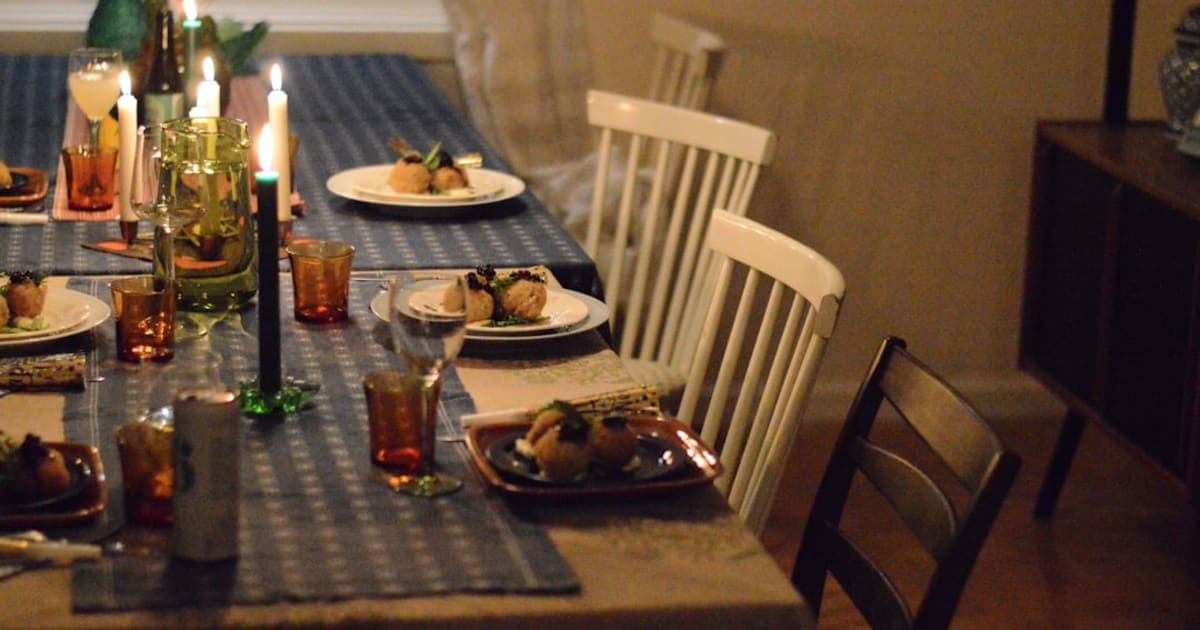
- Three festive meals: You are required to eat three special meals on Shabbat. This is a commandment! The food should be delicious and the table should be beautiful.
- Wine and Kiddush: Kiddush over wine opens the Friday night and Shabbat day meals.
- Snacking: Eating between meals is perfectly fine, and classic Shabbat foods are designed to be enjoyed throughout the day.
Prayer and Synagogue
- Attending services: Shabbat morning services include the weekly Torah reading and are the spiritual highlight of the week for many.
- Personal prayer: Quiet, personal conversation with God is always encouraged.
Torah Study
- Learning Torah: Shabbat is considered the ideal time for Torah study. Many people study the weekly Torah portion, learn a chapter of Mishna, or read a Jewish book.
- Discussion: Talking about ideas, values, and spiritual topics is a hallmark of the Shabbat table.
Family and Community
- Quality time with family: Without phones, screens, or work to distract, Shabbat provides unparalleled family time. This is when Shabbat becomes meaningful for children.
- Visiting friends and neighbors: Walking to visit people is a beloved Shabbat activity.
- Hosting guests: Having people over for a Shabbat meal is one of the great mitzvot.
Rest and Recreation
- Sleeping and napping: The Shabbat nap is practically an institution. Resting is not just allowed; it is celebrated.
- Walking: Taking a walk on Shabbat afternoon is a classic and wonderful way to enjoy the day.
- Reading: Secular reading is permitted (though some prefer to focus on Jewish texts). Board games, puzzles, and other non-electronic activities are also fine.
- Singing: Shabbat songs (zemirot) at the table and informal singing are central to the day's joy.
Marital Intimacy
Shabbat is considered an especially appropriate time for marital intimacy. Far from being restrictive about physical pleasure, Shabbat actually elevates it, recognizing that physical closeness between spouses is a holy act that reflects the harmony and completeness of the day.
The Gray Areas: Common Questions
Can I Tear Toilet Paper?
Tearing is one of the 39 melachot. The standard practice is to pre-tear toilet paper before Shabbat or use tissues. Some people use specially pre-cut Shabbat toilet paper.
Can I Open Packages or Bottles?
This is a nuanced area. Opening bottles and cans on Shabbat has specific guidelines that depend on the type of container and closure. Check our detailed article on the topic.
Can I Take Medicine?
If you are genuinely ill or in significant discomfort, taking medicine is permitted. For minor ailments, the guidelines are more nuanced. In cases of serious illness or medical need, virtually all Shabbat restrictions are set aside because the preservation of life (pikuach nefesh) overrides Shabbat.
Can I Carry My Child?
Within your home, absolutely. In a public space, the rules about carrying children on Shabbat depend on whether there is an eruv and other factors discussed in our dedicated article.
Can I Ask a Non-Jew to Do Something for Me?
The laws of amira l'nochri (asking a non-Jew) are detailed and nuanced. In some circumstances it is permitted; in others, it is not. Our article on the topic covers the key principles.
The Big Picture: Why These Rules Exist
Every Shabbat prohibition serves a purpose: to create space. Space to breathe. Space to connect. Space to be present. Space to experience the sacred. When you stop cooking, you make space for meals that were prepared with love in advance. When you stop checking your phone, you make space for real conversations. When you stop working, you make space for rest, for play, for prayer, for singing, for being fully human.
The people who keep Shabbat do not experience it as a burden. They experience it as the best day of the week. The rules are the container that holds the magic. Without the boundaries, the unique quality of Shabbat would leak away, and it would become just another weekend day. With them, Shabbat becomes what the sages called it: a taste of the World to Come.
Start where you are. You do not need to take on every rule at once. Try one thing: put your phone away for the Friday night meal. Light candles. Make Kiddush. Sit with the people you love. And see what happens when you give Shabbat even a small space to work its magic. You might never want to go back.