Jewish Clothing and Modesty
Why Do Some Jews Dress Differently?
If you have ever visited an Orthodox Jewish neighborhood or attended a traditional synagogue, you may have noticed distinctive ways of dressing: men wearing kippot (skullcaps) and tzitzit (fringes), women in longer skirts and sleeves, certain styles of hats and coats that seem to belong to another era. What is behind these choices?
Jewish dress codes are rooted in a concept called tzniut -- often translated as "modesty" but carrying a much richer meaning. Tzniut is not just about covering up. It is about dignity, intentionality, and the idea that a person's inner qualities should matter more than their outward appearance. How you dress reflects how you see yourself and how you engage with the world.
The Value of Tzniut
Tzniut is one of those Jewish values that touches many areas of life -- not just clothing, but speech, behavior, and even how you carry yourself. At its core, tzniut is about directing attention to what truly matters: character, wisdom, kindness, and spiritual depth rather than physical appearance.
The prophet Micah captured the essence of tzniut: "Walk humbly with your God." This humility is not about self-effacement -- it is about living with awareness that there is something greater than outward display.
What Do Jewish Men Wear?
The Kippah (Yarmulke)
The most recognizable Jewish garment is the kippah -- the small head covering worn by Jewish men. Wearing a kippah is a constant reminder of God's presence above. It is an act of humility and awareness that expresses: "I am always conscious of something greater than myself."
Kippot come in every imaginable style -- knitted, velvet, leather, colorful, plain. The style often reflects a person's community or background, but the underlying meaning is the same.
Tzitzit (Fringes)
The Torah commands Jewish men to wear fringes (tzitzit) on the corners of four-cornered garments. Today, this is fulfilled by wearing a tallit katan (a small four-cornered garment) under the shirt, with the fringes visible at the waist. The tzitzit serve as a physical reminder of all the commandments.
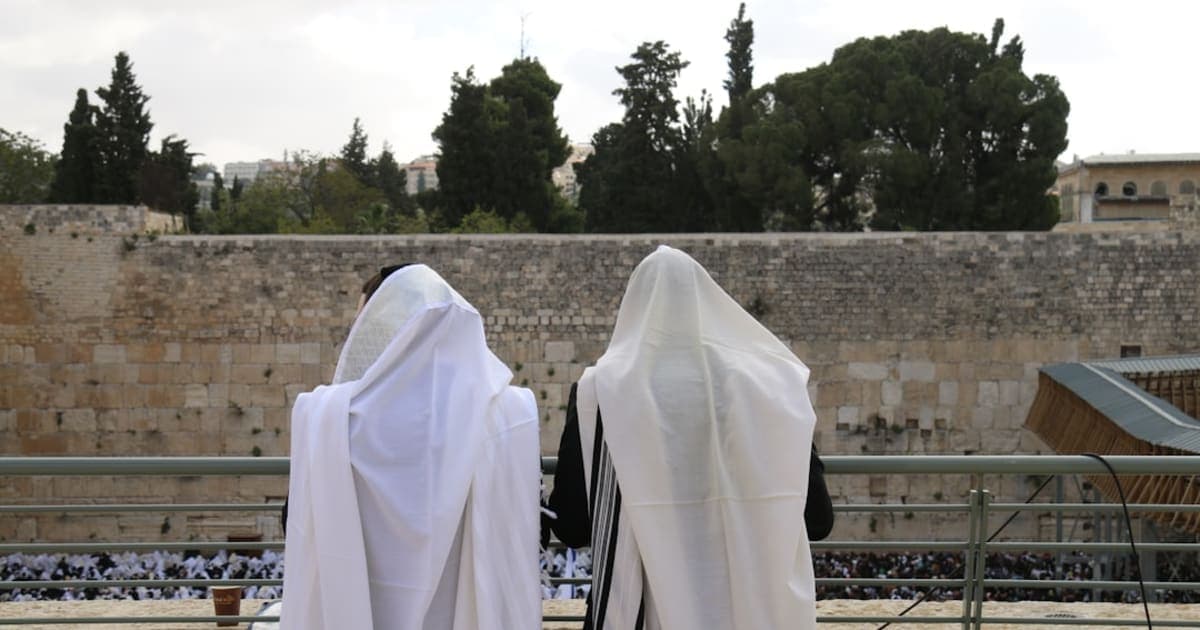
During morning prayer, men also wear a tallit gadol -- a larger prayer shawl with tzitzit on each corner.
Other Items
In some communities, men wear specific styles of hats, coats, or garments that reflect their particular tradition. Hasidic men, for example, may wear long black coats and fur hats (shtreimels) on Shabbat. These are customs of specific communities rather than universal Jewish requirements.
What Do Jewish Women Wear?
Modest Dress
Jewish law provides guidelines for women's dress that emphasize covering certain areas of the body: typically the collarbones, elbows, and knees. The specific standards can vary somewhat between communities, but the general principle is that clothing should be dignified rather than attention-seeking.
Within these guidelines, there is enormous room for personal style. Modest dress does not mean frumpy or uniform -- many Jewish women dress beautifully and fashionably while maintaining tzniut standards.
Hair Covering for Married Women
Married Jewish women cover their hair in public. This is done with a variety of coverings: scarves (tichels), hats, berets, or wigs (sheitels). Hair covering is understood as a sign of the special, private bond of marriage -- reserving something intimate for one's spouse.
Dressing for Shabbat and Special Occasions
One of the most tangible ways to honor Shabbat is through clothing. The tradition of wearing special, nicer clothes on Shabbat and holidays reflects the concept of kavod Shabbat -- honoring the day. Many people have designated "Shabbat clothes" that they look forward to wearing each week. It is a simple practice that helps mark the transition from the ordinary week to the sacred day.
What to Wear When Visiting a Synagogue
If you are visiting a synagogue for the first time, here are general guidelines:
- Men: Wear a kippah (usually available at the entrance), long pants, and a collared shirt. On Shabbat, business casual or dressy attire is appropriate.
- Women: Wear a skirt or dress that covers the knees, sleeves that cover the elbows, and a neckline that covers the collarbone. Avoid very flashy or attention-grabbing outfits.
- Both: Err on the side of dressing more formally rather than less. When in doubt, think "Shabbat dinner with a rabbi" rather than "casual Friday."
Beyond Clothing: Tzniut as a Way of Life
True tzniut extends far beyond what you wear. It influences:
- Speech: Avoiding gossip and harmful talk, speaking gently, not boasting
- Behavior: Acting with dignity and restraint, avoiding ostentatious displays of wealth or status
- Relationships: Maintaining appropriate boundaries that protect the sanctity of marriage and the dignity of all interactions
Tzniut is ultimately about living with an awareness that your inner world -- your character, your values, your relationship with God -- is more important than any external display. When clothing reflects that awareness, it becomes not a restriction but an expression of who you truly are.