Hamantaschen vs. Oznay Haman: History & Recipe
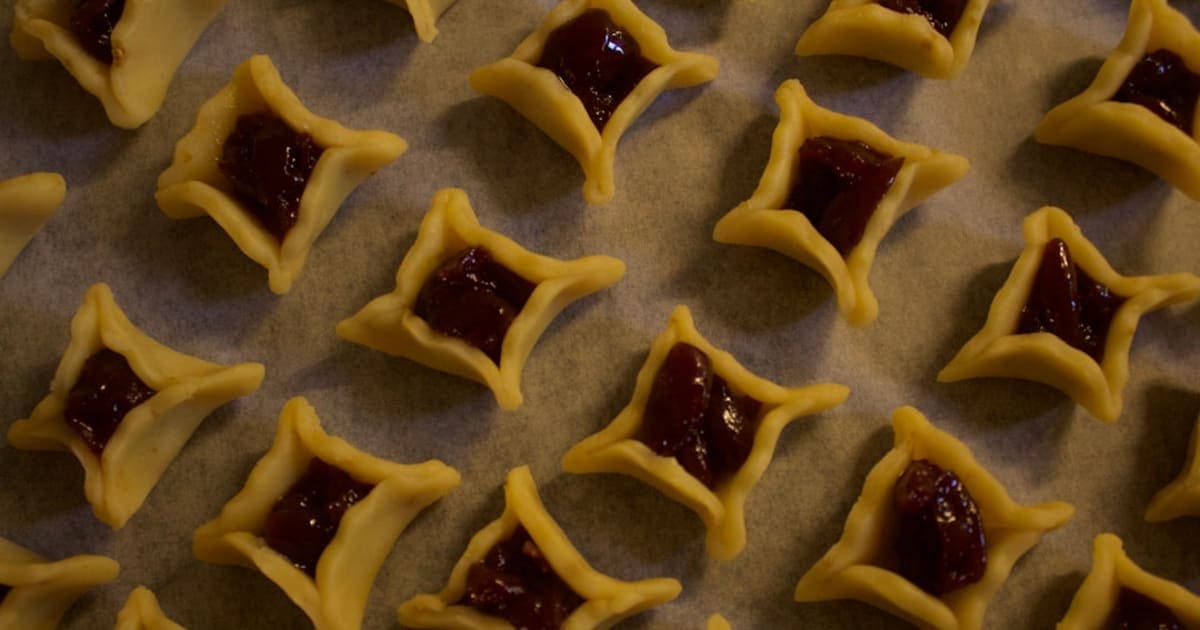
Hamantaschen: History, Meaning, and a Classic Recipe
What is that triangular pastry with the mysterious filling that appears in Jewish bakeries every spring? If you have ever bitten into a hamantasch and wondered about its story, you are in for a treat, both literally and figuratively. These iconic Purim cookies carry centuries of history, layers of symbolism, and enough deliciousness to make them one of the most beloved foods in Jewish cuisine.
What Are Hamantaschen?
Hamantaschen (singular: hamantasch) are triangular filled pastries traditionally eaten on Purim. They consist of a cookie-like dough folded into a triangle around a sweet filling. The most traditional fillings are poppy seed (mohn in Yiddish), prune (lekvar), and apricot, though modern bakers have expanded the repertoire enormously.
The Name: Haman's Ears or Haman's Pockets?
The name "hamantaschen" is Yiddish and has been interpreted in two ways. In Yiddish, taschen means "pockets," so hamantaschen literally means "Haman's pockets," perhaps referring to the bribes Haman collected or the lots (purim) he carried. In Hebrew, the pastries are called oznei Haman, meaning "Haman's ears." This name may refer to an old custom of cutting off a criminal's ears before execution, or it may simply describe the ear-like shape of the folded dough.
Some food historians believe the original name was actually mohntaschen (poppy seed pockets), referring to the traditional poppy seed filling, and that the similarity to "Haman" led to the association with the Purim villain.
Why the Triangular Shape?
Several explanations have been offered for the distinctive three-cornered shape:
Haman's hat: The most popular explanation is that the triangular shape represents the three-cornered hat that Haman supposedly wore. While there is no historical evidence for this specific hat style in ancient Persia, the image has become deeply embedded in Purim folklore.
Haman's ears: As mentioned above, the Hebrew name suggests the shape represents ears.
The three patriarchs: Some mystical interpretations connect the three corners to Abraham, Isaac, and Jacob, whose merit protected the Jewish people.
Haman's weakened strength: A kabbalistic teaching suggests that the triangle represents Haman's power being "folded in" and diminished.
Hidden filling: Perhaps most fittingly for Purim, the filling is hidden inside the dough, echoing the theme of hiddenness that pervades the entire holiday. Just as God's hand was hidden in the Purim story, the sweet filling is concealed within the pastry.
A Brief History
The earliest records of triangular Purim pastries date to medieval Europe. German and Central European Jewish communities made filled pastries for Purim as early as the 16th century. The poppy seed filling was especially popular in Eastern European communities, where poppy seeds were abundant and affordable.
As Jewish communities migrated and evolved, so did hamantaschen. Sephardic communities developed their own Purim pastries, such as fazuelos (fried dough twists) and orejas de Haman (deep-fried ear-shaped pastries). These are delicious alternatives to the Ashkenazi hamantasch and well worth trying.
Classic Poppy Seed Hamantaschen Recipe
For the dough:
3 cups all-purpose flour, 1 cup sugar, 3 eggs, half cup vegetable oil, 1 teaspoon vanilla extract, 2 teaspoons baking powder, pinch of salt, zest of one orange (optional)
For the poppy seed filling:
2 cups ground poppy seeds, half cup honey, half cup sugar, 2 tablespoons lemon juice, zest of one lemon, quarter cup raisins (optional)
Instructions:
1. Mix dry ingredients together. In a separate bowl, beat eggs with sugar, oil, and vanilla. Combine wet and dry ingredients to form a soft dough. Wrap in plastic and refrigerate for at least one hour.
2. For the filling, combine poppy seeds, honey, sugar, lemon juice, and zest in a saucepan. Cook over low heat, stirring frequently, for about 10 minutes until thickened. Let cool completely.
3. Roll dough to about 3mm thickness on a floured surface. Cut circles using a glass or round cookie cutter (about 3 inches in diameter).
4. Place a teaspoon of filling in the center of each circle. Fold three sides up to form a triangle, pinching the corners firmly to seal. Leave a small opening in the center to show the filling.
5. Place on a parchment-lined baking sheet. Bake at 350F (175C) for 15 to 18 minutes until lightly golden. Let cool on the baking sheet before transferring.
Modern Filling Ideas
While traditional fillings remain beloved, creative bakers have expanded the hamantasch universe dramatically. Here are some popular modern options:
Chocolate: Chocolate chips, Nutella, or chocolate ganache make rich, indulgent hamantaschen that children especially love.
Halva: Crumbled halva mixed with a bit of tahini creates a Middle Eastern-inspired filling that is uniquely delicious.
Lotus/Cookie Butter: The trendy spread makes a surprisingly perfect hamantasch filling.
Dulce de Leche: Caramel lovers will adore this creamy, sweet filling.
Peanut Butter and Jelly: A fun, kid-friendly option that combines two classics.
Fig: A nod to the Mediterranean roots of Jewish cuisine.
Cheese: Sweetened ricotta or cream cheese, sometimes combined with lemon zest, for dairy hamantaschen.
Tips for Perfect Hamantaschen
Chill the dough: Cold dough is much easier to roll and handle. If it gets too soft, pop it back in the fridge for 15 minutes.
Do not overfill: The most common hamantasch mistake is using too much filling, which causes them to open during baking. A teaspoon is usually enough.
Pinch firmly: Really press those corners together. Some bakers dab a tiny bit of egg wash on the edges before folding to help them seal.
Watch the oven: Hamantaschen go from perfectly golden to overdone quickly. Start checking at 13 minutes.
Let them cool: Hamantaschen firm up as they cool. If they seem soft when you take them out, that is often perfect.
Hamantaschen as Mishloach Manot
Hamantaschen are a staple of mishloach manot, the Purim gift packages sent to friends. A few homemade hamantaschen, beautifully wrapped, make a meaningful and personal addition to any mishloach manot package. Many families make hamantasch baking a pre-Purim family activity, with everyone pitching in to roll, fill, and fold.
Whether you are a traditionalist who swears by poppy seed or an innovator experimenting with cookie butter and matcha, hamantaschen are the edible heart of Purim. Their hidden fillings mirror the hidden miracles of the holiday, and their sweetness reminds us that even stories that begin with danger can end with celebration.
For more Purim traditions, explore our guides to What Is Purim? and Purim costumes and celebrations.