Etiquette for Shabbat Guests
You Have Been Invited to a Shabbat Meal. Now What?
Getting invited to someone's Shabbat table is one of the most meaningful experiences in Jewish life. Whether you are a lifelong Jew who has never attended an observant Shabbat dinner, someone from another faith curious about Judaism, or a new friend who just received an invitation, the prospect can be both exciting and a little nerve-wracking. What should you bring? What should you wear? What happens during the meal? Are there things you should or should not do?
Relax. The most important thing to know is this: you are welcome. Hospitality on Shabbat is one of the most treasured values in Jewish tradition, and your hosts have invited you because they genuinely want to share this experience with you. They are not expecting perfection; they are hoping for connection. That said, a little preparation goes a long way toward helping you feel comfortable and showing your hosts that you appreciate the invitation.
Before You Arrive: Preparation
What to Bring
Bringing a gift for your hosts is a lovely gesture, but it requires a little thought in the context of Shabbat:
- Wine or grape juice: This is the classic Shabbat gift. A bottle of kosher wine or grape juice is always appreciated. Look for a kosher certification symbol on the label. If you are unsure what qualifies, ask at a wine store or look for labels that say "kosher" or have a recognizable kosher symbol (like an OU, OK, or Star-K). For more on this topic, see our guide to kosher wine.
- Flowers: A beautiful option, but with a note: your host may not be able to arrange them on Shabbat (since cutting stems and arranging flowers may involve prohibited activities). Bring them already arranged in a vase, or bring them early enough on Friday that they can be set up before Shabbat begins.
- Kosher baked goods or dessert: If you want to bring food, make sure it is kosher. Store-bought items with a kosher certification are the safest bet. Homemade food can be complicated because of kosher kitchen requirements, so check with your host first.
- A book or small gift: A non-food gift avoids all kashrut concerns. A Jewish book, a lovely candle (not for use on Shabbat itself), or a small decorative item are all thoughtful choices.
- Nothing at all: If you are unsure about what to bring, it is perfectly fine to come empty-handed. Your presence is the gift. Your hosts invited you, not your bottle of wine.
What to Wear
Shabbat is treated as a special occasion, so guests typically dress nicely:
- Men: Slacks and a button-down shirt are standard. A suit and tie would not be out of place in some communities. A kippah (head covering) is worn during the meal and blessings; your host will likely have extras available, but you can bring your own if you have one.
- Women: A nice dress, skirt, or dressy outfit is appropriate. In more observant homes, modest dress is appreciated: covered shoulders, skirts or dresses below the knee, and not overly revealing necklines. If you are not sure about the dress code, it is perfectly fine to ask your host in advance.
- General rule: Think "nice dinner party" rather than "casual barbecue." Shabbat is a weekly celebration, and dressing up is part of honoring the day.
Timing
Shabbat operates on its own clock:
- Friday night meals typically begin around or shortly after sunset (when Shabbat starts). Arrive at the time your host suggests. In the summer, this might be quite late; in winter, it might be early.
- Shabbat lunch usually begins after the morning synagogue service, often around noon or 12:30, though this varies by community.
- Be punctual. Your hosts have timed the meal around Shabbat's schedule and have likely been cooking and preparing all day. Arriving on time shows respect for their effort.
The Phone Question
This is the big one for many first-time Shabbat guests. In observant Jewish homes, phones, electronics, and technology are not used on Shabbat. This means:
- Turn your phone off or put it on silent before you arrive. Better yet, leave it in your bag, pocket, or car. Do not take it out at the table.
- Do not take photos. Even if the table looks gorgeous and you want to share it on social media, resist the urge. Photography is not done on Shabbat in observant homes.
- Do not check messages. If you need to respond to something urgent, step away discreetly and handle it outside the home, but even this should be avoided if at all possible.
- If you are not Shabbat-observant yourself, your hosts will understand. They are not going to judge you. But showing respect for their practice by keeping your phone out of sight is a meaningful gesture of courtesy.
During the Meal: What to Expect
A Shabbat meal follows a general structure, though details vary by family and community. Here is what typically happens:
Shalom Aleichem and Eshet Chayil
The Friday night meal often begins with the singing of Shalom Aleichem (welcoming the angels) and Eshet Chayil (honoring the women). You do not need to know the words; just listen, enjoy, and join in if you can.
Blessing the Children
If there are children in the family, parents often bless them at this point, placing their hands on each child's head and reciting a traditional blessing. This is a beautiful and moving moment to witness.
Kiddush
The head of the household (or another designated person) recites Kiddush, the sanctification of Shabbat over a cup of wine or grape juice. Everyone stands or sits (customs vary), and at the end of the blessing, everyone responds "Amen" and drinks from their own cup of wine or grape juice. If you do not drink alcohol, grape juice is always an acceptable alternative.
Washing Hands (Netilat Yadayim)
Before eating bread, there is a ritual hand-washing. A special two-handled cup is used to pour water over each hand. After washing, a short blessing is recited, and then, importantly, no one speaks between the hand-washing and the blessing over the bread. Do not be alarmed by the sudden silence. It is not awkward; it is intentional. Just wash your hands (your host will show you how), stay quiet, and wait for HaMotzi.
HaMotzi (Blessing Over Bread)
The blessing is recited over two loaves of challah. After the blessing, the challah is cut or torn, dipped in salt, and distributed to everyone at the table. Take your piece and enjoy the first taste of what is sure to be a delicious meal.
The Meal Itself
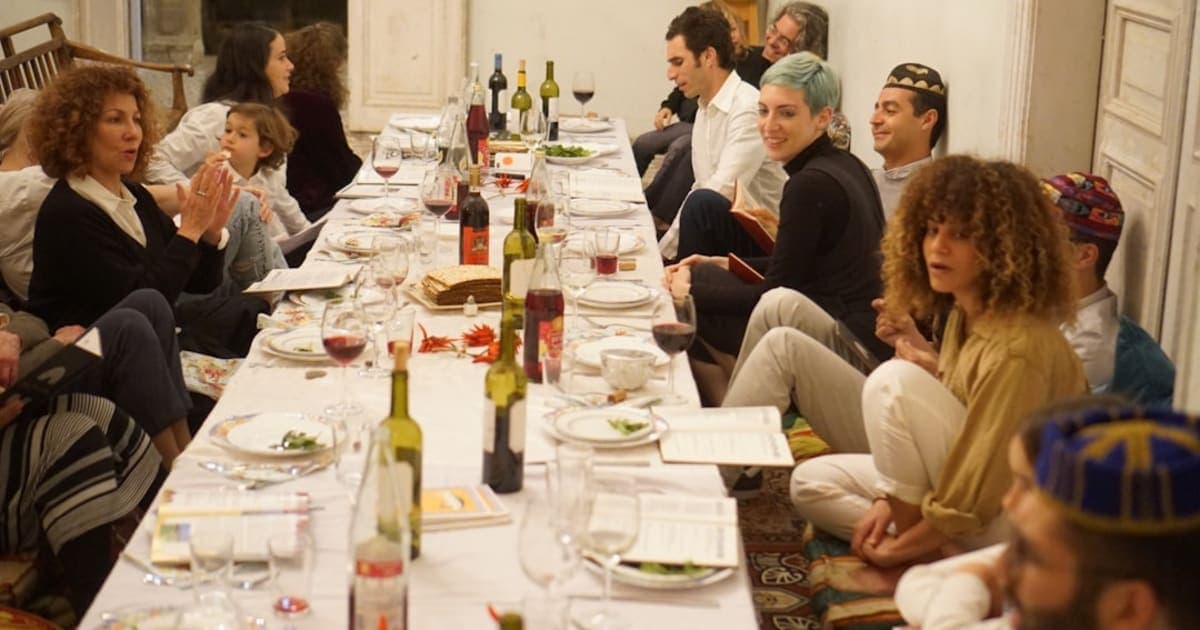
Now comes the food, and Shabbat food is typically outstanding. Your hosts have likely spent hours cooking for Shabbat, and the meal will usually include multiple courses: appetizers, soup, a main course, and dessert. Between courses, expect:
- Torah discussions: Many families share a thought or discussion about the weekly Torah portion. You do not need to contribute unless you want to. Listening is perfectly appropriate.
- Singing (zemirot): Songs are a central part of the Shabbat meal. Your hosts will likely sing various zemirot between courses. Feel free to hum along, join in on the chorus, or simply enjoy listening. Song sheets or booklets are often provided.
- Conversation: Shabbat meals are known for deep, meaningful conversation. Without phones to distract, people actually talk to each other. Be open to engaging discussions about life, values, and ideas.
Birkat Hamazon (Grace After Meals)
The meal concludes with Birkat Hamazon, a prayer of thanks recited after eating bread. A booklet (called a bencher) will be available. You can follow along in Hebrew or English, or simply sit respectfully while others recite it.
Etiquette Tips That Will Make You a Welcome Guest
- Compliment the food. Your host has worked hard. Genuine appreciation goes a long way.
- Ask questions. Hosts love when guests are curious about Shabbat traditions. "What is this blessing for?" or "Why do we do this?" are wonderful questions that show interest and engagement.
- Do not rush. Shabbat meals are long, often two to three hours or more. Sit back, relax, and enjoy the pace. There is nowhere else you need to be.
- Offer to help. Offering to help serve or clear dishes is polite, though your host may decline. In some homes, guests are encouraged to help; in others, the host prefers to handle everything. Follow their lead.
- Do not turn lights on or off. In observant homes, light switches are not used on Shabbat. If you accidentally flip a switch, do not panic. Just let your host know quietly.
- Respect the Shabbat boundaries. Even if you personally do not observe Shabbat restrictions, be mindful of your host's practice. Avoid talking about work, showing people things on your phone, or suggesting activities that would involve Shabbat violations.
- Say thank you. After the meal, express your gratitude warmly. A follow-up thank-you message (sent after Shabbat, of course) is a wonderful touch.
If You Are Not Jewish
Non-Jewish guests are absolutely welcome at Shabbat meals. In fact, sharing Shabbat with people of different backgrounds is something many Jewish families love to do. A few additional notes:
- You are welcome to participate in all the rituals: washing hands, eating challah, listening to Kiddush, and even singing along with zemirot.
- You do not need to say the blessings if you are not comfortable doing so. Listening respectfully is perfectly fine.
- Feel free to ask about anything that is unfamiliar. Your hosts will be happy to explain.
- If you are offered wine or grape juice for Kiddush, it is fine to accept even if you are not Jewish.
Common Concerns Addressed
"I am vegetarian/vegan. Can I eat?"
Let your host know in advance. Shabbat meals typically have enough variety that accommodating dietary preferences is manageable, and most hosts are happy to do so.
"I do not know any Hebrew."
That is completely fine. You do not need to know Hebrew to enjoy a Shabbat meal. Just follow along, and someone will guide you through anything that requires participation.
"I do not know when to stand, sit, or respond."
Watch what others do and follow their lead. No one will be offended if you sit when others stand or vice versa. Everyone understands that guests may be unfamiliar with the customs.
"How long will this take?"
A typical Friday night meal lasts two to three hours. Shabbat lunch can be similar. Plan accordingly, and if you need to leave at a certain time, let your host know in advance.
The Gift of Being a Guest
In Jewish tradition, being a guest is not just about receiving hospitality. It is about participating in one of the most important mitzvot (commandments) in Jewish life: building community and sharing the joy of Shabbat. Your hosts are fulfilling the mitzvah of hachnasat orchim (welcoming guests), and by accepting their invitation, you are helping them fulfill it.
So accept the invitation. Dress nicely. Bring a bottle of wine if you want to. Put your phone away. And open yourself to one of the most beautiful, warm, and meaningful experiences that Jewish life has to offer. The Shabbat table has room for you.